Are Air Purifiers Safe Around Babies, Children, and Pregnancy?
Are Air Purifiers Safe Around Babies, Children, and Pregnancy?: Yes—air purifiers are generally safe around babies, children, and during pregnancy when…
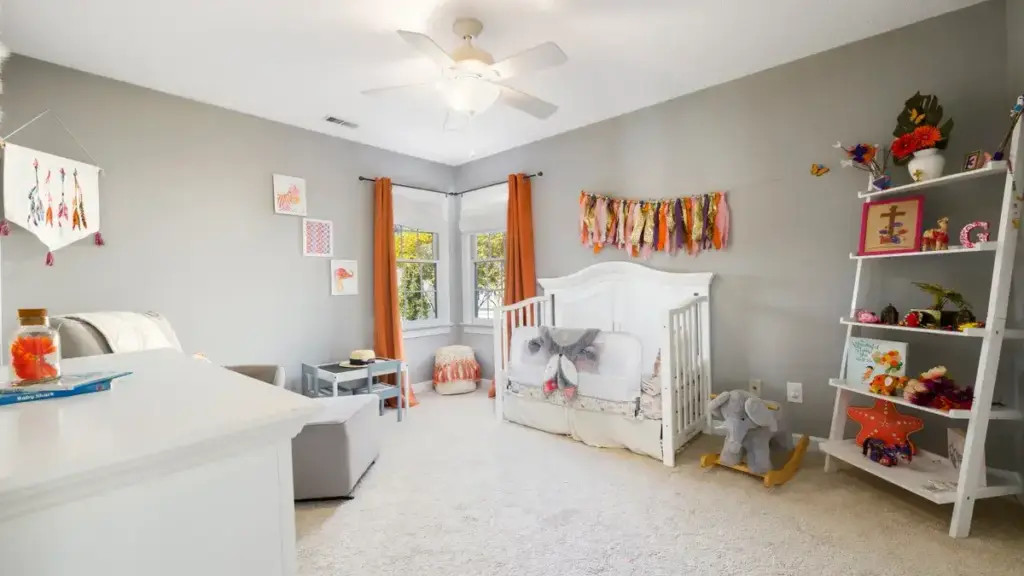
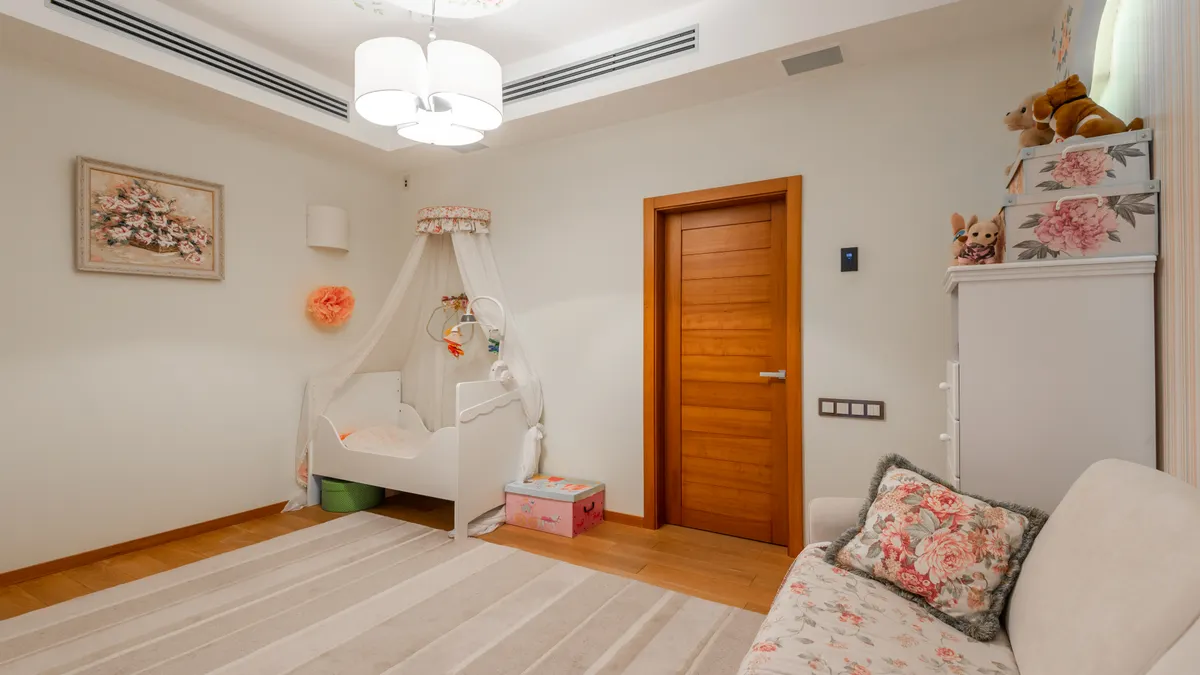
Bright nursery with a crib, toys, and shelving
Last updated: November 26, 2026
Quick answer: Yes—air purifiers are generally safe around babies, children, and during pregnancy when they are used correctly, and a basic HEPA unit is usually the simplest choice. A 60-decibel hum can be hard to live with in a nursery, so placement, noise, filter type, and any feature that adds chemicals or extra airflow matter. If there is a medical concern, speak with a qualified professional about your own situation. The EPA’s indoor air cleaner guidance is a good starting point: https://www.epa.gov/indoor-air-quality-iaq/air-cleaners-and-air-filters-home
Key takeaways
- A plain room air purifier with a proper filter is usually the safer choice for a nursery than a strong scent device or a dusty fan.
- Placement matters as much as the machine itself: keep airflow away from a crib or changing area.
- For sensitive households, simple designs are easier to trust than models with extra features you do not need.
- Clean air still depends on the room, so a purifier works best with normal ventilation and regular filter changes.
- If a baby has breathing symptoms, or pregnancy comes with health concerns, get personal medical guidance rather than guessing.
Who this guide is for
This guide is for a parent or caregiver who wants cleaner indoor air in a home with a baby, child, or pregnancy in it. It assumes you already know the room size you want to cover and that you can read a product label or manual.
It also assumes you are asking a safety question, not a buying question. The short answer is that air purifiers are usually a reasonable household tool, but a nursery is not the place to improvise with a noisy machine, an odd smell, or a model with unclear features. For anything involving asthma, allergies, premature infants, or a high-risk pregnancy, a qualified clinician should guide the final call.
The safest way to think about an air purifier is as a filter with a fan, rather than as a treatment device or a medical fix. It pulls room air through media such as a HEPA filter, which is a high-efficiency particle filter used to capture fine dust, pollen, and similar particles. It is not a cure for illness, and it does not replace fresh air, cleaning, or medical care; if symptoms or pregnancy risks are involved, consult a qualified professional. The EPA’s indoor air cleaner guidance is a good starting point: https://www.epa.gov/indoor-air-quality-iaq/air-cleaners-and-air-filters-home
Why an air purifier can help, and where it cannot
An air purifier can lower the amount of airborne particles in a room, which is the main reason people use one around babies and during pregnancy. That can matter in a nursery where dust, pet dander, smoke particles, or pollen drift in from other rooms or from outside. The benefit comes from the filter and the airflow through it, not from fragrance or “extra” features.
A purifier cannot make a room perfectly clean. It cannot fix poor ventilation on its own, and it cannot remove every gas or odor unless the model is built for that specific purpose. It also does not replace removing the source of the problem, such as smoke, mold growth, or a wet carpet. If a room has a serious source issue, a purifier is a stopgap, not the answer.
A useful mental model is this: a purifier reduces the number of particles in the air over time, while ventilation exchanges indoor air with outdoor air. Both can matter. In a nursery, that usually means a quiet purifier plus regular window airing when outdoor air quality allows it, rather than sealing the room and hoping the machine does everything.
How should I set one up in a nursery?
An air purifier is safest in a nursery when it is placed on the floor or a low, stable surface, kept away from the crib, and used with a simple filter design. Start by choosing a model that clearly lists the filter type and room coverage. If the label or manual does not make the basics obvious, that is a warning sign.
-
Pick a model with a true particle filter. Look for HEPA or a clearly stated high-efficiency filter, and verify that the product describes particle capture rather than only odor control. If the packaging is vague, the device may not be the right fit for a baby’s room.
-
Match the unit to the room size. Check the manufacturer’s room coverage and compare it with the nursery dimensions in square feet or square meters. If the room is much larger than the unit is designed for, the purifier may run loudly without doing much.
-
Place it several feet from the crib. Keep the airflow from blowing directly toward the baby’s face, bedding, or play area. If the crib rattles, bedding moves, or the baby seems bothered by the draft, the placement is wrong.
-
Use a stable, tip-resistant spot. A flat floor is better than a wobbly chair or shelf. Verify that a toddler cannot pull it over and that the cord is out of reach. A loose cord or unstable base is a real hazard in a child’s room.
-
Start on the lowest effective setting. The goal is cleaner air without a harsh blast of sound or wind. If the machine only seems useful at the highest setting, it may be the wrong size for the space.
-
Check the noise before using it overnight in the nursery. A purifier that hums softly can be easier for a child than one that clicks, buzzes, or cycles loudly. If the noise keeps waking the baby or making bedtime harder, the device is not doing its job well enough.
-
Avoid added scent or mystery modes. If a model uses fragrance cartridges, ozone-producing functions, or an ionizing mode you cannot clearly disable, choose a simpler unit instead. The problem is not that the purifier is “strong,” but that extra features can add uncertainty.
-
Ventilate the room normally. Open windows when outdoor conditions are reasonable and close them when outside smoke or pollen is worse than indoors. If the room feels stuffy for long periods even with the purifier on, the purifier is not a substitute for air exchange.
What should I look for in filter types?
A plain particle filter is usually the simplest choice for households with babies or pregnancy concerns. HEPA filters are widely used because they are designed to capture very small airborne particles, which is the part of indoor air most families are trying to reduce. A sealed system matters too: if air leaks around the filter, some dirty air can bypass the media.
Activated carbon is useful for certain odors and gases, but it is not the same as a particle filter. It can help with smells from cooking or nearby traffic, yet it should not be the only filter you rely on if the main concern is dust or smoke particles. In a nursery, a machine with both a particle filter and carbon may be helpful, as long as the rest of the design is simple.
The type to treat carefully is any unit that adds a special electrical or chemical treatment to the air. If the manual includes ionization, plasma, or other extra modes, read the safety notes closely and prefer a model that can run without those features. If you are unsure, consult a qualified professional before using it around a baby or during pregnancy. A baby room does not need a “smart” air treatment system; it needs clean, stable, low-drama airflow.
The EPA’s consumer guidance on air cleaners is useful here because it explains why filter choice matters more than marketing language: https://www.epa.gov/indoor-air-quality-iaq/air-cleaners-and-air-filters-home
When should I stop and ask a professional?
An air purifier is not the right answer when the home problem is bigger than particles, when the baby has symptoms, or when pregnancy comes with medical complexity. These are the situations that call for outside help rather than trial and error.
Baby has wheezing, repeated coughing, or trouble breathing: That may point to a medical issue, not just indoor air quality — contact a qualified clinician promptly and do not rely on a purifier as the fix.
There is smoke, mold, or water damage in the room: The source needs attention first — a purifier can reduce particles, but it does not solve the underlying hazard.
The unit gives off a smell, spark, or unusual noise: Something may be wrong with the device — unplug it and replace it rather than trying to “see if it settles down.”
The purifier blows directly at the crib and cannot be repositioned: The setup is wrong for a nursery — move it or choose a different model with gentler airflow.
Pregnancy comes with asthma, heart disease, or another higher-risk condition: The safest setup can vary by person — ask a qualified professional what indoor air changes make sense in that case.
The child keeps disturbing the unit or touching the cord: The risk is now physical, not just about air — relocate the purifier, secure the cord, or use a different room.
What mistakes do people make most often?
The most common mistake is buying a loud, oversized machine and thinking louder means better. A 60-decibel hum may be hard for a baby to ignore, and a room that feels like a wind tunnel is not a good nursery setup. A quieter unit that actually fits the room is usually the better choice.
Another mistake is placing the purifier beside the crib because that feels “closest to the baby.” That can create a direct draft, which is the opposite of what you want. A few feet away, with airflow pointed past the sleeping area rather than at it, is usually a better arrangement.
A third mistake is trusting marketing terms instead of the filter label. “Allergy,” “fresh,” or “advanced clean” does not tell you whether the filter is the right type. Check the manual for the actual filter description, room coverage, and any extra modes.
A fourth mistake is skipping ventilation because the purifier is running. Closed windows do not automatically mean safer air. If outdoor air is clean enough, a short airing-out period can help, and if outdoor air is poor, the purifier should be part of a larger plan, not the only plan.
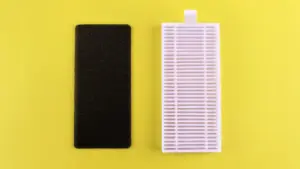
A fifth mistake is forgetting maintenance. A clogged filter can reduce airflow and make the unit work harder for less result. If the filter change schedule is unclear or the unit has no obvious indicator, that is a practical downside, not a small detail.
Which setups are safest, and which are not?
The safest setup is usually a simple, quiet purifier with a true particle filter, placed away from the crib, used in a room of appropriate size, and paired with ordinary ventilation when outdoor air allows it. A nursery does not need the most complicated machine on the shelf, and a 60-decibel unit is usually too loud for a sleeping baby.
| Setup | Likely fit for babies, children, pregnancy | Main reason |
|---|---|---|
| Simple HEPA-style purifier with clear room coverage | Better fit | Focuses on particles, fewer confusing features |
| Purifier with carbon plus particle filter | Sometimes useful | Can help with smells as well as particles |
| Noisy unit aimed at the crib | Poor fit | Drafts and sound can disturb sleep |
| Unit with unclear extra modes | Poor fit | Harder to judge what the air is actually getting |
| Oversized machine on high speed | Mixed fit | May be too loud for a nursery |
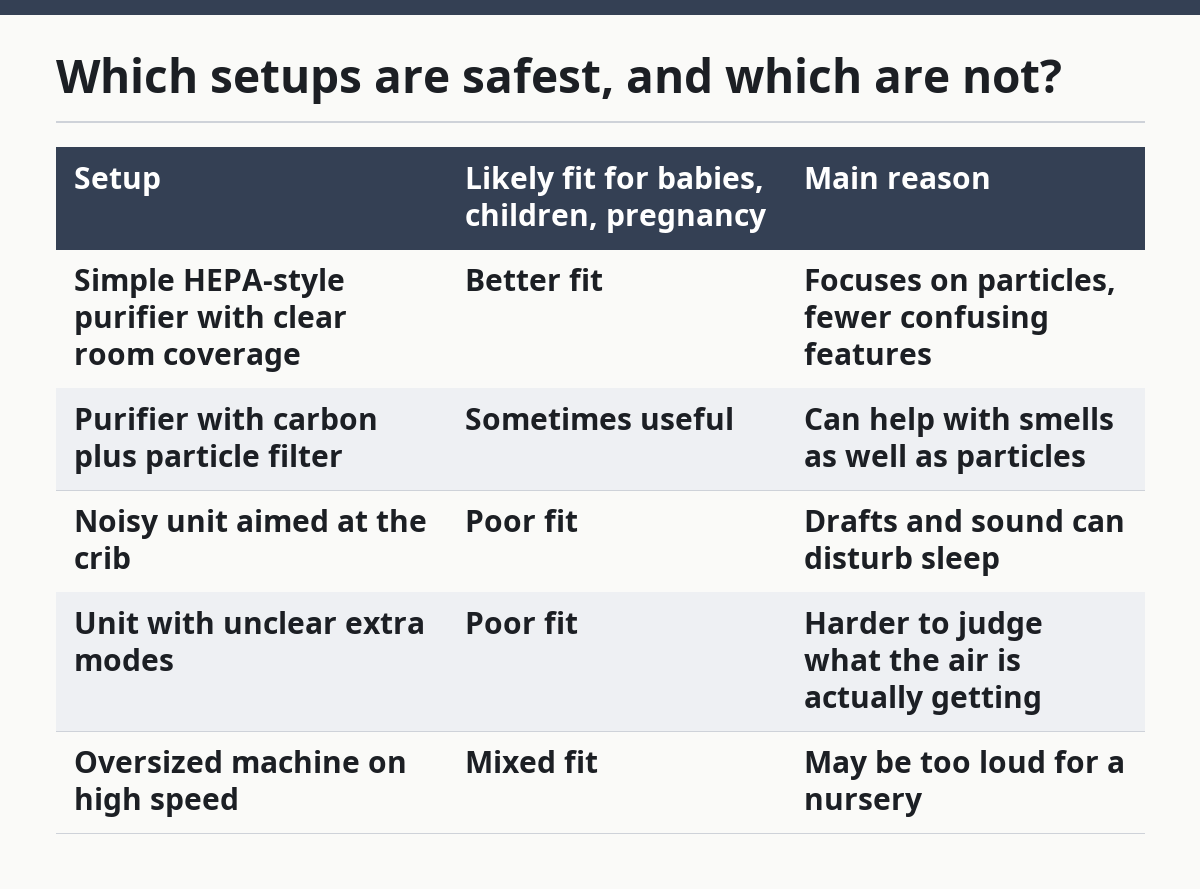
The unsafe end of the spectrum is not “any air purifier.” It is the combination of poor placement, unclear features, and unrealistic expectations. If a unit requires guessing, it is the wrong machine for a baby room.
Can room ventilation change the answer?
Yes, room ventilation changes how useful and how comfortable an air purifier will be. If a room is sealed and stale, a purifier may lower particles but still leave the space feeling stuffy. If outdoor air is smoky or pollen-heavy, opening windows may make indoor air worse for a while, so the better option is to keep windows closed and let the purifier do more of the work.
The best pattern is often flexible rather than fixed. Use ventilation when outside air is cleaner than inside, then rely on the purifier when outside air is worse. That balance matters in a nursery, because babies and young children spend long stretches in one room and are more affected by persistent discomfort, noise, and drafts than a healthy adult might be.
If you want the broader standards behind these safety points, the site’s main guide on air purifier safety and standards is the right place to start after this article.
Can I use an air purifier in a nursery?
Yes, a nursery is one of the most common places to use an air purifier. The safer approach is a quiet model with a clear particle filter, placed away from the crib and used without extra fragrance or airflow aimed at the baby.
Are air purifiers safe during pregnancy?
Yes, they are generally considered safe during pregnancy when used as ordinary household appliances. The main concerns are the same as for any sensitive household member: noise, placement, and feature choice. If pregnancy is complicated by asthma or another condition, a qualified professional should guide the decision.
What features should I avoid for children?
Avoid features that create confusion or extra exposure, such as strong scent functions, unclear ionizing modes, and settings that blow air directly where a child sleeps. Also avoid unstable units, exposed cords, and models that are too loud for a bedroom or nursery.
How do I know if the purifier is helping?
A good sign is cleaner-feeling air without drafts, noise problems, or a strong smell from the machine itself. If the room still feels stale, the filter clogs quickly, or the unit must run on high all the time, the setup may be wrong for the room size or ventilation pattern.
Drafted with AI; not yet reviewed by a person.