How to Reduce Cooking Smells With an Air Purifier
How to Reduce Cooking Smells with an Air Purifier is easiest when you pair an air purifier with ventilation and cleanup. A purifier with activated carbon…
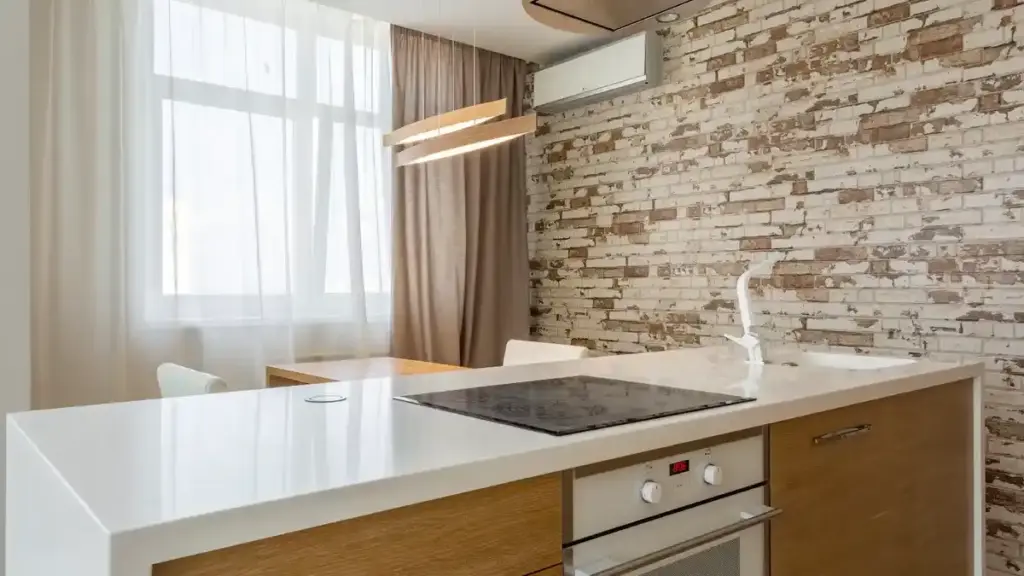
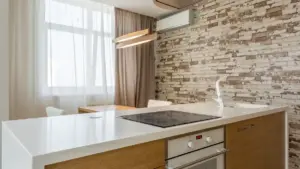
Modern kitchen island with cooktop and range hood
Last updated: November 26, 2026
How to Reduce Cooking Smells with an Air Purifier is easiest when you pair an air purifier with ventilation and cleanup. A purifier with activated carbon can help reduce kitchen odors, but it works best as part of a routine that also uses the range hood and removes grease after cooking.
Key takeaways
- An air purifier helps with cooking odors most when it has a real activated carbon filter, not just a basic dust filter.
- A range hood still matters because it removes smoke, steam, and grease near the stove before smells spread.
- Kitchen placement is a short-distance job: the purifier needs to catch air that is moving out of the cooking zone.
- Grease particles and burned residue can keep smells hanging around even after the stove is off.
- If the odor is strong, the purifier is a support tool, not the whole fix.
How does an air purifier help with cooking smells?
An air purifier helps with cooking smells by pulling odor-laden air through an activated carbon filter that can trap some of the gases and vapors behind the smell. That is different from a filter that mainly catches dust or grease particles. Cooking odors often come from a mix of smoke, oil mist, and food vapors, so one device cannot solve every part of the problem by itself.
The part that matters most is carbon. A purifier with only a HEPA filter can catch fine particles from frying or burning, but it will not do much for the smell molecules that drift through the kitchen. That is why an air purifier with an activated carbon filter is the right tool for odor control, while a range hood handles the heavy work at the stove.
Think of the job in layers. The range hood pulls air up at the source. The purifier cleans what escapes into the room. After-cooking cleanup removes the residue that keeps releasing odor for an hour or more.
The U.S. Environmental Protection Agency’s guide to air cleaners for the home is a useful reference for how air cleaners fit into indoor air control, and the Association of Home Appliance Manufacturers has a room air cleaner directory that helps explain purifier standards and product categories. Those are the right places to check when a label is vague. See also the EPA’s broader indoor air guidance and the AHAM directory for a basic product framework.
What kind of air purifier works best in a kitchen?
An air purifier with a strong activated carbon filter works best in a kitchen, especially one designed to handle odors, not just dust. A purifier that only lists HEPA filtration is better for particles than for cooking smells. A model with a larger carbon bed usually has more odor-capturing material than one with a thin carbon coating.
Here is the practical trade-off:
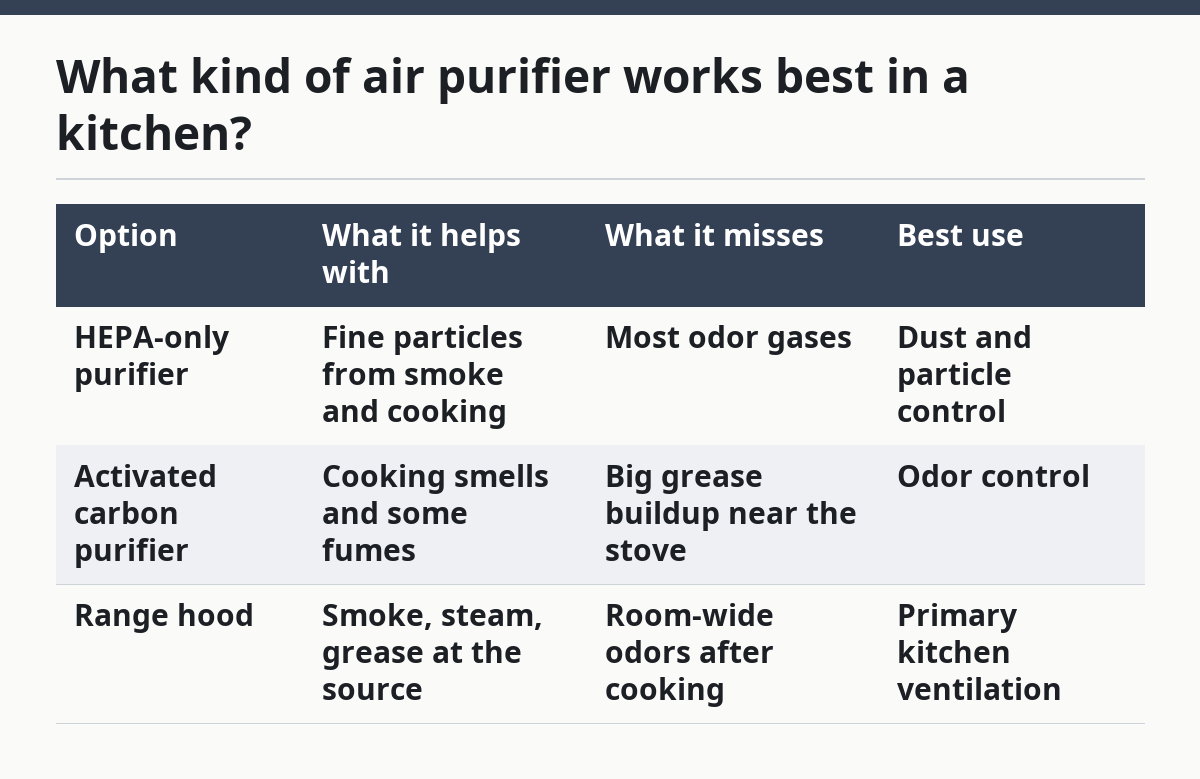
| Option | What it helps with | What it misses | Best use |
|---|---|---|---|
| HEPA-only purifier | Fine particles from smoke and cooking | Most odor gases | Dust and particle control |
| Activated carbon purifier | Cooking smells and some fumes | Big grease buildup near the stove | Odor control |
| Range hood | Smoke, steam, grease at the source | Room-wide odors after cooking | Primary kitchen ventilation |
A kitchen purifier does not need to be fancy to help, but it does need enough carbon to matter. If the carbon layer is tiny, the smell reduction may fade fast once it starts loading up with odor. That is why a purifier marketed for general air cleaning can disappoint in a kitchen even if it works well in a bedroom.
Placement also affects results. A kitchen setup usually works best when the purifier sits where it can catch moving air from the cooking area without being blocked by cabinets or a wall. The point is to intercept odor before it spreads into the rest of the home.
For many readers, the most useful clue is simple: if the product description never mentions carbon, odor, or VOCs, it may not be the best tool for cooking smells.
How should you run it while cooking?
You should run the purifier before, during, and after cooking so it can catch odors as they form and keep working after the pan comes off the heat. The most useful habit is to start it a few minutes before cooking and leave it on after the meal is done. That extra run time matters because smells do not stop when the burner turns off.
Use this simple routine:
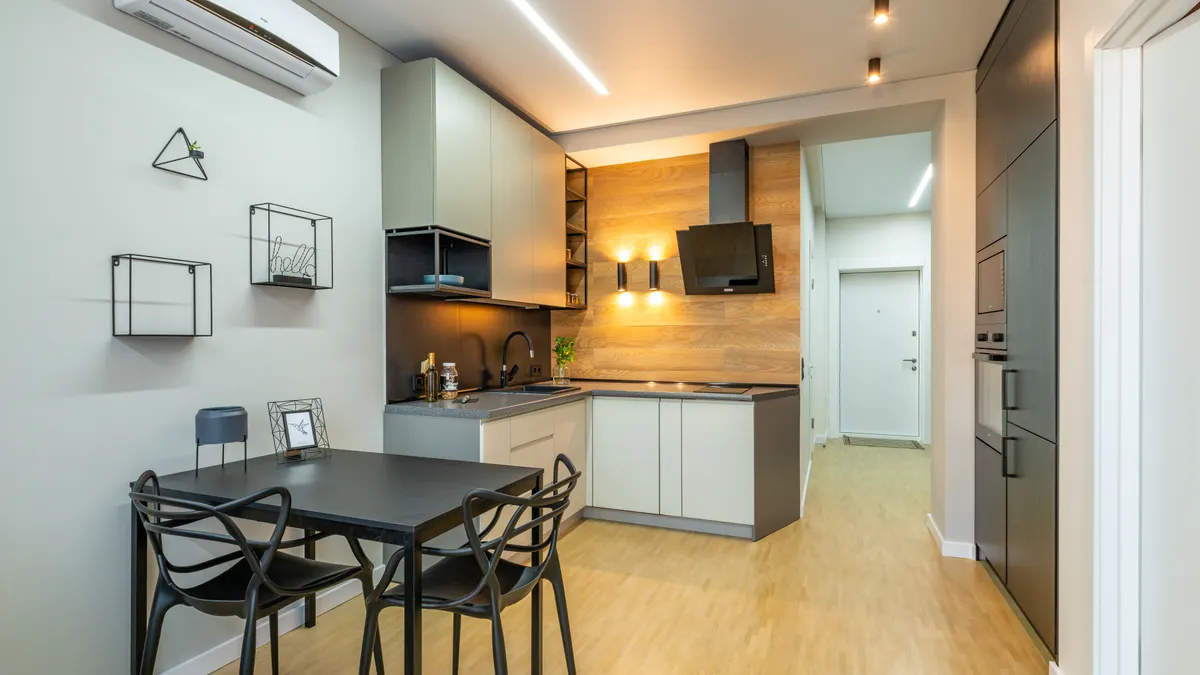
- Turn on the range hood before the first pan goes on the stove. That pulls smoke and steam upward from the source.
- Start the air purifier a few minutes before cooking. This gives the kitchen air a head start and helps it begin filtering the room before odors build up.
- Keep the purifier on during frying, searing, or spice-heavy cooking. Those are the moments when airborne odor rises fastest.
- Leave the purifier running after cooking for a while. This helps clear the lingering smell that hangs in warm air and on soft surfaces.
- Use the kitchen exhaust or open a window if the smell is still strong. Air movement matters as much as filtration in a small room.
The result you want is not a totally odor-free kitchen in the middle of cooking. The result is a smell that does not spread as far, does not cling as long, and clears faster after cleanup. That is a realistic win.
A common mistake is turning the purifier on only after the food is done. By then, much of the odor may already be in the room, on curtains, or in the upholstery. Another mistake is using it with the range hood off because “the purifier is enough.” That usually leaves the heaviest smoke and grease right where they started.
Where should you place the purifier in the kitchen?
You should place the purifier where it can catch air from the cooking zone without sitting in the direct splash path of the stove. For many kitchens, that means a spot a short distance from the range, not hidden in a far corner. The purifier needs moving air to process, so it should not be boxed in by a wall, chair, or cabinet door.
The right spot depends on the room shape, but the rule is simple: keep a clear path for air to reach the intake. If the purifier is tucked behind a stool or jammed under a shelf, it has less chance to pull in the air that carries the smell. A kitchen with an open layout may need the purifier closer to the cooking area than a closed galley kitchen.
A range hood and a purifier should not compete for the same job. The hood should handle the source above the stove. The purifier should handle the room air that escapes. If the purifier sits too far away, it becomes a general room cleaner instead of a kitchen helper.
One useful check is to stand where you usually cook and trace the air path. If steam and odors tend to drift toward the dining area, the purifier should sit in that path, not off to the side. That is the simplest way to make a single unit do more work.
This is also where people make a costly mistake: they place the purifier where it looks tidy instead of where air actually moves. The smell then lingers, and the purifier gets blamed for a placement problem.
How do you keep smells from coming back after cooking?
You keep smells from coming back by cleaning the grease and residue that hold odor after the meal is over. Cooking smells are not only floating in the air; they also settle on stovetops, backsplashes, pans, and nearby cloth surfaces. If those stay dirty, they keep giving off smell long after the air looks clear.
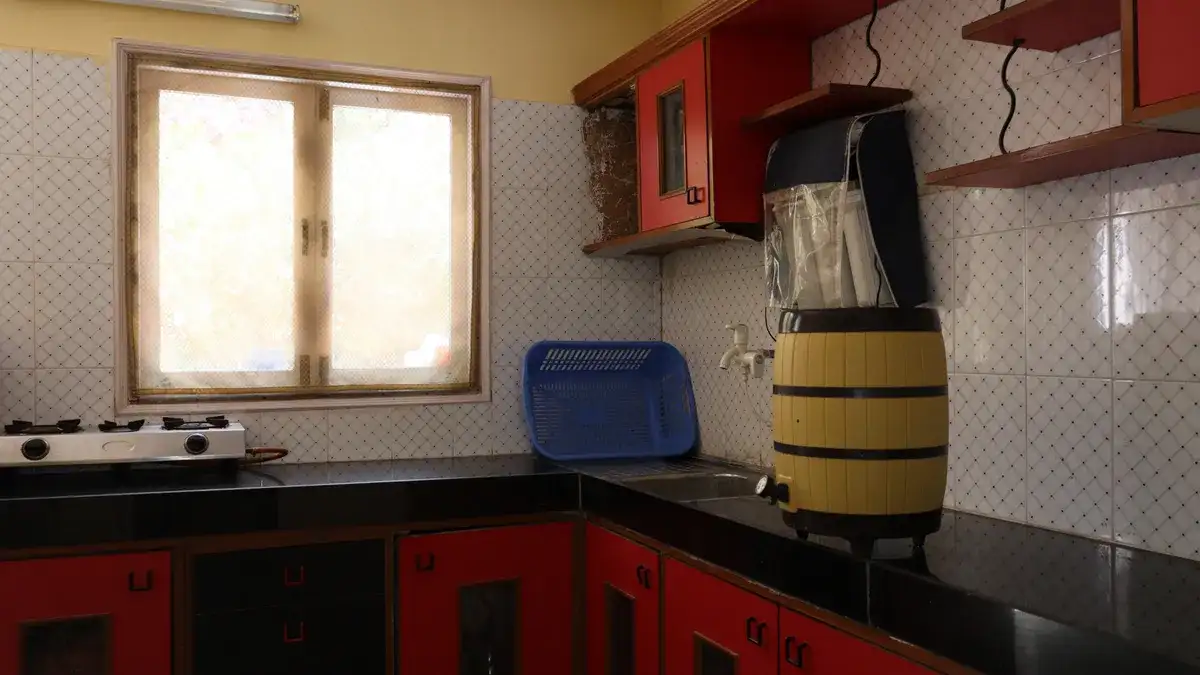
Focus on the quickest odor traps first. Wipe the stove, the counter near the stove, and any splatter on the backsplash. Wash or soak greasy pans right away. A 5-minute cleanup can help the room smell better faster than a purifier alone.
Soft items matter too. A towel hanging near the stove can hold fry oil and garlic smell. A chair cushion or curtain nearby can do the same. If the kitchen smell keeps returning, those fabrics are often part of the reason. The air purifier helps with what is in the air, but it cannot clean the items that keep releasing odor.
This is where people often expect too much from filtration. A purifier can reduce the smell level, but it cannot erase residue on pans or walls. If you cook often, the room can start to smell like last night’s dinner unless grease cleanup is part of the habit.
The best result is pairing the purifier with cleanup every time, not only after heavy meals. That keeps the kitchen from becoming a storage space for old odors.
When is an air purifier not enough?
An air purifier is not enough when the kitchen air is filled with heavy smoke, strong grease buildup, or repeated odors from frequent high-heat cooking. In those cases, the purifier can help, but the main fix is better ventilation and faster source control. A weak carbon filter will also struggle if the odor load is high.
If you only cook lightly, the purifier may do most of the visible work. If you fry often, sear meat, toast spices, or burn food now and then, you need the whole system: range hood, purifier, and cleanup. The purifier is a support tool, not the only tool.
There is also a limit to what carbon can do. Once the filter is saturated, odor control drops. That does not mean the purifier failed; it means the job exceeded the filter’s remaining capacity. A kitchen that smells better one week and worse the next may simply need better filter maintenance, not a new machine.
This page sits in the broader air-quality guide on airpurifierspace.com because kitchen odor control is part of a larger indoor air problem. The same logic applies across the home: remove the source, move the air, then clean what is left behind. A purifier helps most when it is part of that chain.
If a person wants one blunt answer, it is this: buy the purifier for help with lingering odors, not as a substitute for ventilation.
Can an air purifier remove cooking smells?
Yes, an air purifier can reduce cooking smells, especially if it has an activated carbon filter. It works best on lingering odors in the room air, not on the first burst of smoke and steam coming straight off the pan. For the strongest results, pair it with a range hood and keep it running after cooking.
For a quick summary: the purifier helps most after the food is off the heat. It is less effective against heavy smoke at the source. It is most useful when the kitchen has 1 purifier, 1 hood, and 1 cleanup routine.
Is activated carbon good for kitchen odors?
Yes, activated carbon is the part of an air purifier that helps most with kitchen odors. It is useful because it targets odor gases and vapors rather than just particles. A purifier without carbon may still help with smoke particles, but it is usually a weaker choice for smell control in the kitchen.
Activated carbon is especially helpful when cooking odors linger for more than a few minutes. It is less helpful when the main problem is grease buildup on surfaces. In that case, the odor source needs cleanup as well as filtration.
Should I use an air purifier while cooking?
Yes, it makes sense to use an air purifier while cooking, especially during frying, searing, and spice-heavy meals. Start it before cooking and leave it on afterward so it can catch odors as they spread. It works best alongside a range hood, not in place of one.
If you cook in the kitchen several times a week, that routine is usually more effective than turning the purifier on only after the meal. A steady habit matters more than a one-time burst of filtration.
Drafted with AI; not yet reviewed by a person.