HEPA vs Activated Carbon Filters: Which Removes What
HEPA filters trap dust, pollen and pet dander. Activated carbon adsorbs VOCs, cooking odors and smoke smell. See which pollutants each filter stops.

Image: Space_Zandria via Pixabay
A HEPA filter physically traps solid particles — dust, pollen, pet dander, smoke particles — in a dense fiber mesh. An activated carbon filter works differently: it adsorbs gas molecules, like VOCs, cooking odors, and smoke smell, onto a porous carbon surface. Neither filter type does the other’s job, which is why the two are usually paired, not substituted.
- HEPA filters remove particles through mechanical trapping. They have no meaningful effect on gases or odors.
- Activated carbon filters remove gases through adsorption onto a porous surface. They have little effect on solid particles like dust or pollen.
- Smoke is a mixed case: the visible particles need HEPA, but the lingering smell is a gas that only activated carbon addresses.
- How much a carbon filter actually helps depends on how much carbon material it contains, not just whether the word “carbon” appears on the box.
- Use the table below to match your specific complaint — dust, pet smell, cooking odor, chemical fumes — to the filter type that actually handles it.
How does a HEPA filter actually remove particles?
A HEPA filter is a dense mat of fine fibers. According to the U.S. Environmental Protection Agency, HEPA is “officially defined by the U.S. Department of Energy” as a filter that removes at least 99.97% of particles with a diameter of 0.3 microns, a size chosen because it’s the hardest size for any filter to catch — particles larger or smaller than 0.3 microns are trapped even more easily. A peer-reviewed air-filtration reference on fibrous filtration describes the same general process for any fiber-based filter: particles larger than the gaps between fibers are caught by simple sieving, while other mechanisms such as interception and electrostatic attraction capture particles as they travel through the fiber bed. Nothing in that process involves breaking down or chemically altering what’s captured.
That’s the key point: HEPA filtration is a physical, mechanical process. The filter doesn’t know or care what a particle is made of — dust, pollen grains, pet dander flakes, and the solid portion of smoke are all captured the same way, by size, as they try to pass through the fiber mesh. Nothing about that process touches a gas molecule, because a gas molecule isn’t a solid particle for the fibers to intercept.

How does an activated carbon filter actually remove gases?
Activated carbon works on a completely different principle: adsorption, not mechanical trapping. The carbon is processed to create an enormous number of microscopic pores, giving a small amount of material a very large internal surface area. As air passes through, gas molecules — including volatile organic compounds (VOCs), cooking odor compounds, and the gas-phase components of smoke smell — stick to that surface instead of passing through.
The EPA’s consumer guidance on home air cleaners directs shoppers toward this exact type of filter for gas-phase pollutants, and it adds an important caveat that shoppers rarely see spelled out: “Activated carbon filters can be effective, provided that there is a large amount of material used in the filter.” In other words, carbon filtration isn’t a yes/no feature. A thin sheet of carbon-coated material wrapped around a HEPA filter and a deep bed of loose carbon granules are both “carbon filters” on a spec sheet, but they don’t hold the same amount of adsorption surface, and the EPA’s own guidance ties effectiveness directly to quantity of material.
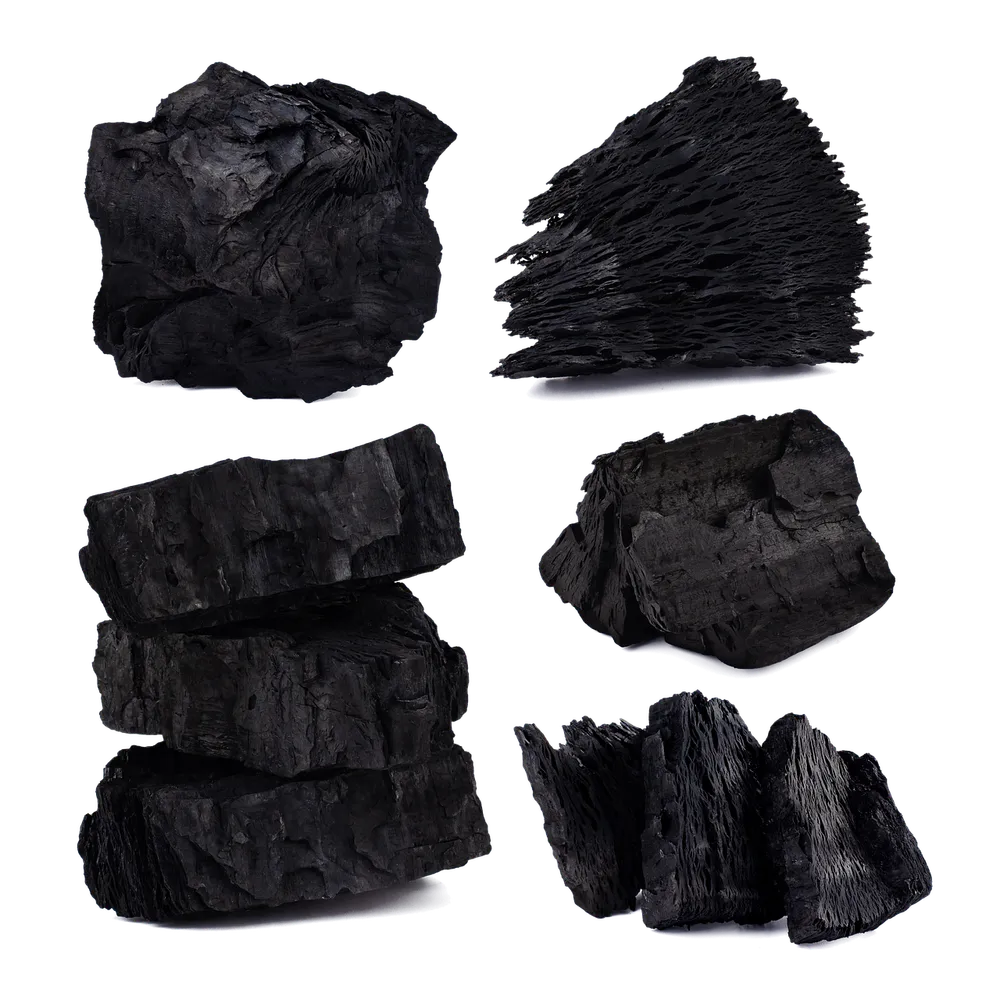
Because adsorption is a surface phenomenon rather than a size-based sieve, activated carbon does essentially nothing for solid particles like dust or pollen — those particles simply aren’t gas molecules, so there’s no adsorption mechanism for them to interact with. A reference work on industrial and consumer air filtration states this directly about activated carbon media: it is “intended for the removal of fumes and odours from gases, with particulate removal as an incidental activity” — meaning any dust it happens to catch is a side effect of its physical structure, not its actual job.
Which pollutants does each filter type actually remove?
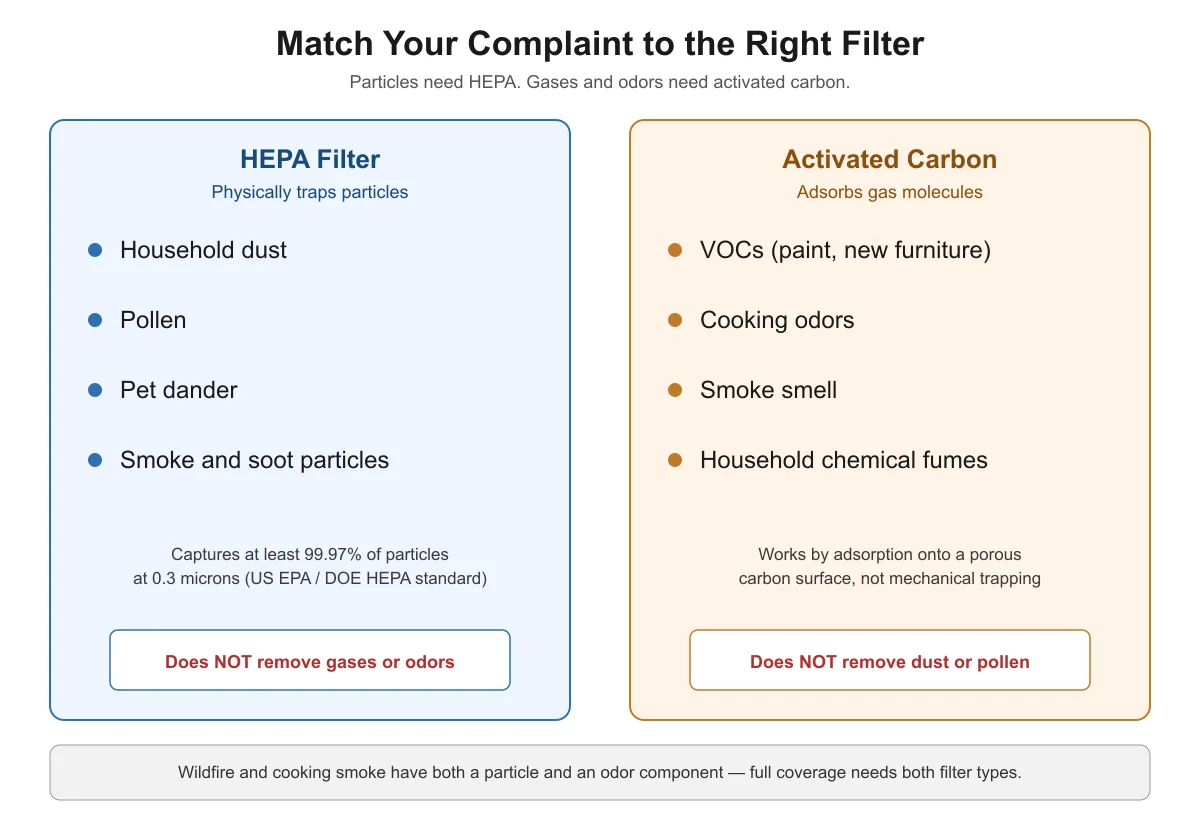
Use this table to match a specific complaint to the filter type that’s actually built to handle it. If your unit only has a HEPA filter and your complaint is on the right side, no amount of HEPA filtration will fix it — you need an activated carbon stage instead, or in addition.
| Your complaint | What it actually is | Filter type that removes it | Why |
|---|---|---|---|
| Household dust | Solid particle | HEPA | Trapped mechanically in the fiber mesh by size |
| Pollen | Solid particle | HEPA | Large enough to be captured well within HEPA’s tested range |
| Pet dander | Solid particle | HEPA | Classified as airborne particulate matter, the category HEPA testing covers |
| Smoke and soot particles | Solid particle | HEPA | The visible, solid portion of smoke is captured as particulate matter |
| Smoke smell (after the visible smoke clears) | Gas | Activated carbon | Odor compounds are gas molecules; HEPA media has no adsorption capacity for gases |
| Cooking odors | Gas | Activated carbon | Gas-phase odor molecules pass straight through a fiber mesh and must be adsorbed instead |
| VOCs (new furniture, paint, flooring) | Gas | Activated carbon | The EPA directs shoppers to a sorbent filter specifically for gas-phase pollutants |
| General household chemical fumes | Gas | Activated carbon | Same adsorption mechanism as VOC and odor removal |
Why does smoke show up on both sides of the table?
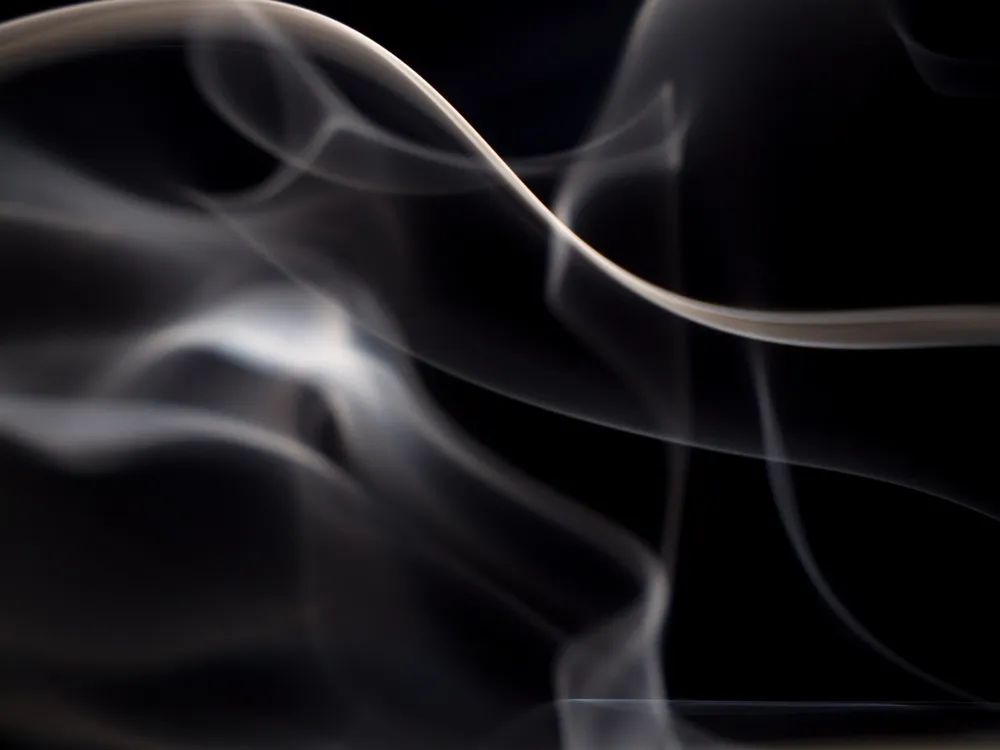
Smoke isn’t one pollutant — it’s a mixture. The visible haze and the soot that settles on surfaces are solid particles, captured by a HEPA filter the same way dust is. But the smell that lingers in curtains, carpet, and clothing long after the visible smoke is gone comes from gas-phase compounds, and a HEPA filter has no way to remove those. That’s why a room can look clear of smoke while still smelling strongly of it: the particle problem has been solved, but the gas problem hasn’t.
This split matters most for cooking odor and wildfire smoke, the two situations people complain about most. A HEPA-only unit will pull the visible smoke particles out of the air, which is genuinely useful, but it won’t touch the smell. If odor is the actual complaint — not just haze — a unit needs an activated carbon stage, not a bigger or better HEPA filter, to do anything about it.
Is a thin carbon layer on a HEPA filter the same as a dedicated carbon filter?
Not necessarily, and a spec sheet rarely tells you which one you’re getting. Many combination filters are built as a HEPA mat with a thin layer of carbon-impregnated material attached to one side, mainly to take the edge off light, everyday odors. A separate, dedicated carbon filter — a canister or cartridge packed with loose granules or pellets — holds a much greater volume of carbon material in the airstream.
The EPA’s guidance ties effectiveness to the amount of carbon material used, not to whether a carbon component is present at all. That means the honest way to judge your own unit is to check what the manufacturer actually states about the carbon stage — its weight, its thickness, or whether it’s described as a standalone replaceable filter rather than a thin coating — rather than assuming any product labeled “HEPA + carbon” handles odors as well as a unit built around a substantial carbon bed. If a listing doesn’t say how much carbon material is involved, that’s a real gap in the information, not a detail to assume away.
Frequently asked questions
Can a HEPA filter remove odors if it’s “fresh” or recently replaced?
No. HEPA filtration is a mechanical, size-based process that captures solid particles, and freshness doesn’t change what the mechanism can do. A new HEPA filter won’t adsorb odor-causing gas molecules any more than an old one will, because particle trapping and gas adsorption are two different physical processes. Odor removal requires an activated carbon stage regardless of how new the HEPA filter is.
Will an activated carbon filter help with dust or pet dander at all?
Not meaningfully. A reference on air filtration describes particulate capture by carbon media as “incidental,” meaning any dust caught is a side effect of the material’s physical structure, not its intended function. If dust or pet dander is your main complaint, a HEPA stage is what actually addresses it — a carbon-only filter is not a substitute.
Does a bigger activated carbon filter always work better than a smaller one?
Generally, yes, in the sense that more carbon material means more surface area available for adsorption, and EPA guidance explicitly ties effectiveness to the amount of material in the filter. That said, no official source we reviewed publishes a specific weight or volume threshold for home air purifiers, so treat “more carbon is better” as a general principle, not a precise number to shop by.
Do I need both a HEPA filter and an activated carbon filter?
It depends on your actual complaint. If particles — dust, pollen, pet dander, visible smoke — are the problem, HEPA alone addresses that. If odors, VOCs, or chemical fumes are the problem, you need activated carbon; HEPA won’t help at all. Many households deal with both particle and odor complaints, which is why combination units exist, but the two stages are solving different problems, not the same one twice.
Related reading on this site
- How to Choose an Air Purifier: Specs That Actually Matter — the full spec-sheet checklist this comparison is part of.
- True HEPA vs. HEPA-Type: How to Spot the Marketing Trick — the exact label wording that separates real HEPA from marketing terms, before you even get to the carbon question.
Sources
- U.S. EPA, Guide to Air Cleaners in the Home — read November 2026
- U.S. EPA, What is a HEPA filter? — read November 2026
- Sparks & Chase, “Air and Gas Filtration,” Filters and Filtration Handbook (Elsevier), via National Library of Medicine — read November 2026
airpurifierspace.com Editorial Team. Last updated: November 12, 2026.