Air Purifier Room Size Guide: How to Match Coverage to Your Space
Air Purifier Room Size Guide: How to Match Coverage to Your Space: for a 120 sq ft room, start with an air purifier rated for at least 120 sq ft, then…
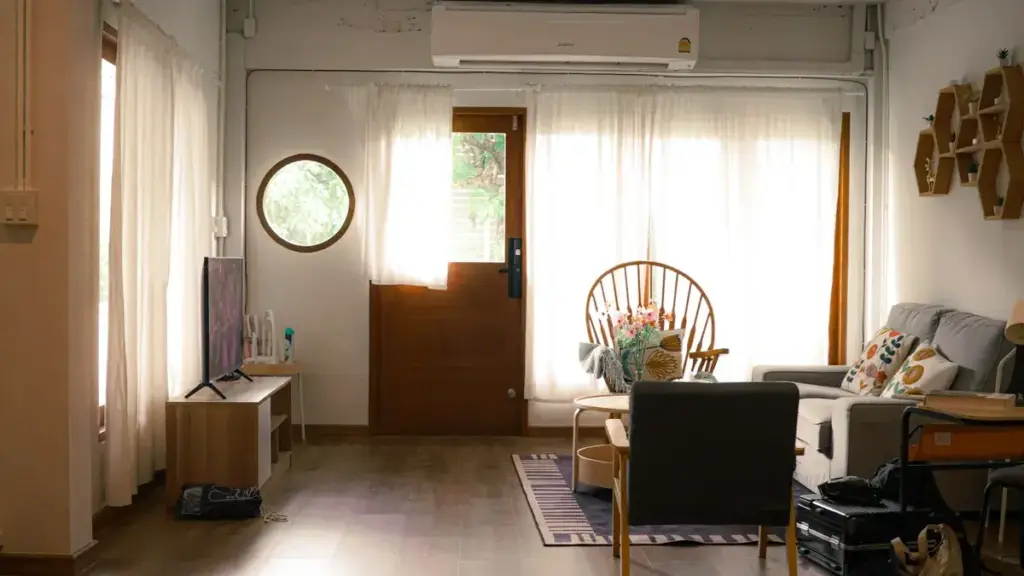
Living room with wall-mounted air conditioner and seating area
Last updated: November 27, 2026
Quick Answer: for a 120 sq ft room, start with an air purifier rated for at least 120 sq ft, then size up if the space is open or tall. This air purifier room size guide focuses on the room’s real layout, not just the square footage on paper. A bedroom, living room, or open-plan space can need a different air purifier room size match even when the floor area looks the same.
Key takeaways
- Room size is the starting point, but walls, door openings, and ceiling height change how far clean air travels.
- A bedroom is usually easier to cover than a living room of the same square footage because it tends to have fewer open paths for air to escape.
- Open-plan spaces are the hardest match for one air purifier because the air has to move around furniture, corners, and gaps.
- If the purifier’s coverage rating seems close to your room size, that may be enough for a closed room, but it can fall short in a split or open layout.
- Treat the listed coverage as a guide, not a guarantee; if you are unsure, check the manufacturer specs and consult a qualified HVAC or indoor air quality professional.
What room size actually means for an air purifier
Room size means the space the purifier can clean well enough to keep the air moving through the filter often enough. That sounds simple, but the number on the box is usually tied to a specific setup: closed doors, standard ceiling height, and a clear path for air to circulate. A 150 sq ft bedroom and a 150 sq ft living room are not always equal in practice, depending on layout and airflow.
The main number people look for is square footage, but that number hides a lot. A long narrow room, a room with a hallway cutout, or a space with a ceiling higher than 8 feet will behave differently from a simple rectangle. The purifier may still be rated for the same square footage, but the real-world match changes once air starts moving around sofas, shelves, and doorways.
That is why a generic chart can mislead. It tells you the floor area, not how the room behaves. If you are choosing for a space that stays closed most of the day, room size is easier to match. If the space connects to a kitchen, hall, or second room, the purifier has to work against a much larger air volume than the floor plan suggests.
One useful frame comes from the EPA’s guidance on air cleaners and air filters for the home, which stresses that product fit depends on the room and the way the space is used: https://www.epa.gov/indoor-air-quality-iaq/air-cleaners-and-air-filters-home. AHAM’s CADR system is another common reference point for room air cleaners: https://www.ahamdir.com/room-air-cleaners/. Both point in the same direction: size the machine for the room you actually live in, not the brochure version of it.
How do I size an air purifier for a room?
Start with the room’s floor area, then adjust for layout, door openings, and how often the room stays closed. That gives you a much better match than guessing from the room label alone.
A simple sizing process helps:
- Measure the room in square feet. Multiply length by width, such as 12 feet by 10 feet for a 120 sq ft room. That gives you the base size the purifier must handle.
- Check the ceiling height. A room that is much taller than standard 8-foot walls has more air to move, so a purifier rated near the room’s floor area may feel undersized.
- Decide whether the room is closed or open. A closed bedroom with a door is easier to cover than a living room that opens into a kitchen or hall.
- Treat the purifier’s rating as a guide, not a guarantee. If the purifier is rated for about the same square footage as the room, that can work in a closed layout, but it leaves less room for weak placement or a cluttered floor plan.
- Match the setup to the room’s use. A sleeping room needs steady, quiet coverage. A living room needs broader air movement and usually more reach around furniture.
- Look at where the purifier will sit. A unit shoved into a corner loses some effectiveness. A central wall or open side of the room usually gives the air a cleaner path.
The point of the process is not to find a perfect number. It is to avoid a mismatch that leaves the purifier running all day without doing enough. If the room is borderline, the better move is usually to size up rather than hope a small unit can keep up. For more room-by-room planning, see our air purifier buying guide and HEPA filter guide.
Which rooms are easiest and hardest to cover?
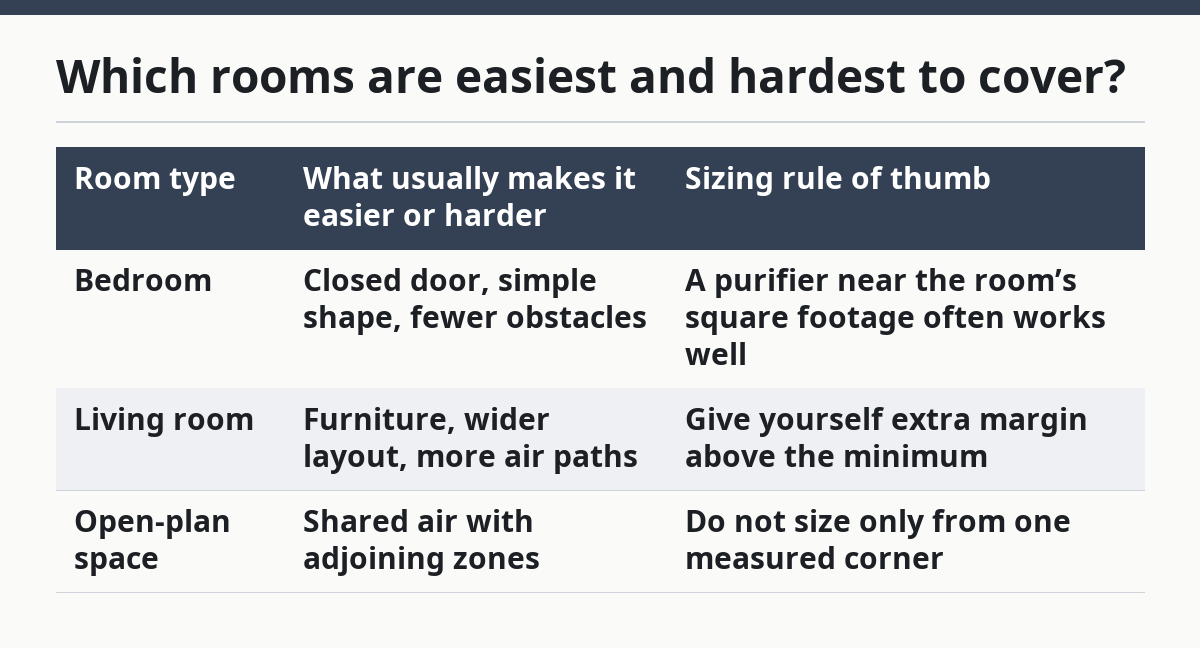
Bedrooms are usually the easiest, and open-plan living rooms are usually the hardest. That difference matters even when both rooms have the same square footage, such as 120 sq ft or 180 sq ft.
A bedroom is often the most forgiving space for a purifier. Doors can stay shut, the furniture is limited, and the air path is simple. That makes the listed room size more trustworthy. If you are buying for sleep, a purifier rated for the bedroom’s square footage is often a reasonable fit, as long as the room is not unusually tall or packed with furniture.
A living room is more complicated. Sofas, chairs, tables, and shelving break up air flow, and the room often connects to other spaces. A purifier that looks large enough on paper may still struggle if it has to clean around a wide seating area or an open doorway. In a living room, placement matters more than it does in a bedroom.
Open-plan spaces are the toughest case. If the kitchen, dining area, and living room flow together, the purifier is not cleaning one neat box. It is trying to handle a larger air volume with fewer barriers, and that can push a single unit past its comfortable limit. A purifier that would be fine in a 150 sq ft closed room may feel underpowered in an open 150 sq ft zone that spills into more space.
| Room type | What usually makes it easier or harder | Sizing rule of thumb |
|---|---|---|
| Bedroom | Closed door, simple shape, fewer obstacles | A purifier near the room’s square footage often works well |
| Living room | Furniture, wider layout, more air paths | Give yourself extra margin above the minimum |
| Open-plan space | Shared air with adjoining zones | Do not size only from one measured corner |
Why does layout matter as much as square footage?
Layout matters because air does not move like water in a bucket; it slips around openings, furniture, and gaps. Two rooms with the same 140 sq ft can behave very differently if one is square and closed while the other connects to a hall and kitchen.
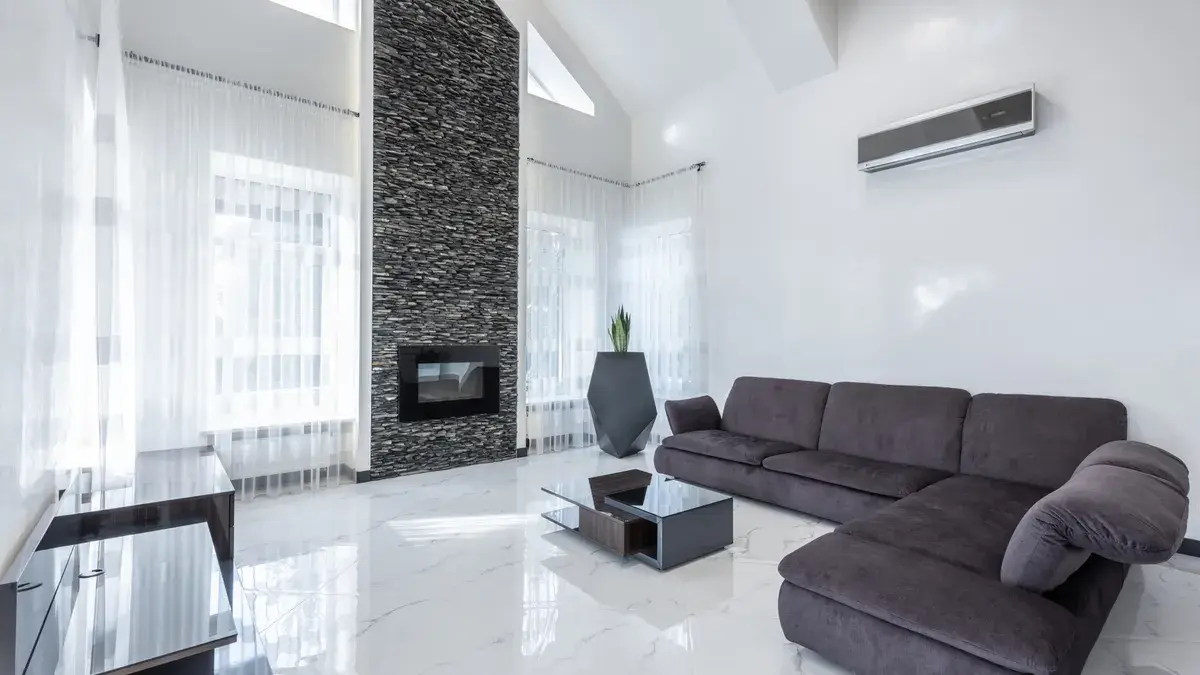
A long narrow room can be harder than a compact square room. Air has to travel farther from one end to the other, and the purifier has to mix clean air back through the whole length. A room with a low divider, a wide archway, or a partial wall can also act bigger than the square footage says.
Furniture changes the picture too. A bookcase near the purifier can block airflow. A sofa can create dead spots where air moves slowly. In a bedroom, one purifier near the center or in a clear spot usually has a better chance of working as intended than the same unit wedged between a bed and a dresser.
This is where a generic room-size chart can fail the reader. Charts are built for neat rectangles, not lived-in rooms. If the layout is awkward, the room may need a purifier with a higher coverage rating than the floor area suggests, or it may need a second unit placed in another zone. The cleaner the path from intake to room air and back out again, the more likely the purifier is to perform close to its rating.
A practical way to think about it: the more walls, openings, and furniture pieces in the room, the less trust you should place in the bare square footage number alone. The room size guide is still useful, but it becomes one input rather than the whole answer. For placement tips, see our air quality basics page.
What if the space is open-plan?
If the space is open-plan, one purifier may help but may not fully cover the connected area. That is the honest answer for a kitchen-dining-living layout, especially when the opening is wide and the room has no door.
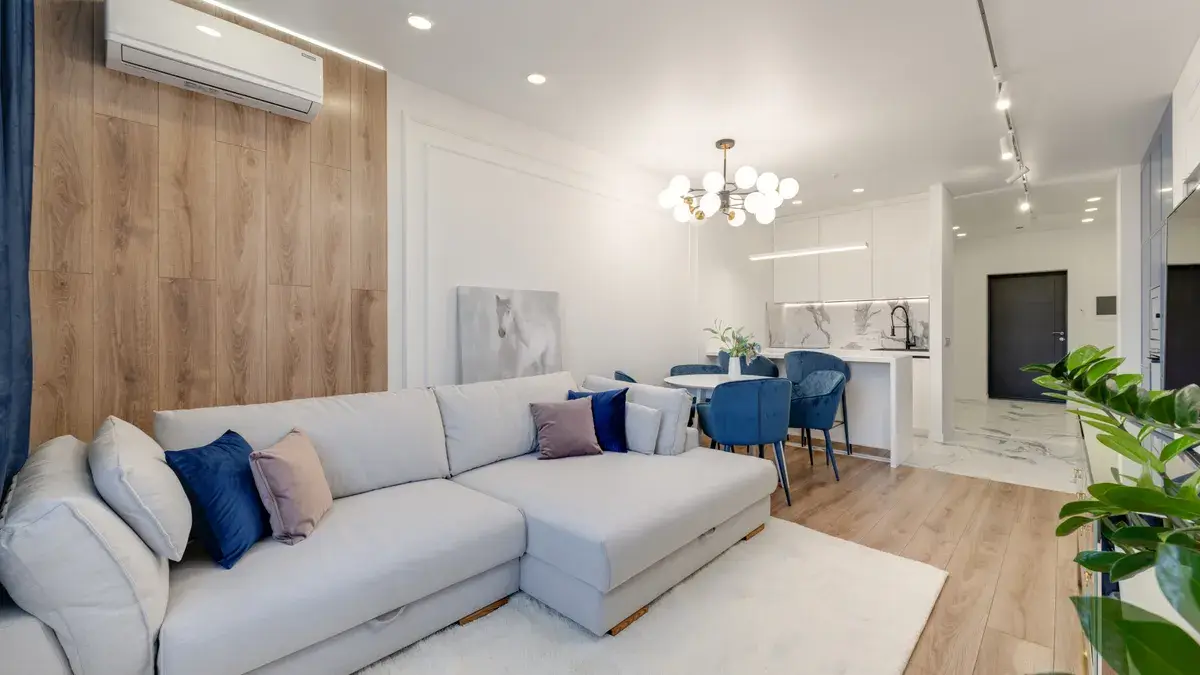
Open-plan rooms are where size matching gets tricky. A purifier can only clean the air that reaches it, so if the layout lets air spread into a dining nook or hallway, the purifier has to work harder. A unit rated for 200 sq ft may do fine in a closed 200 sq ft room. In a 200 sq ft zone that is really part of a larger shared space, performance may be less even.
The first question is not “How big is the corner where I plan to place it?” The first question is “How much air is actually shared across the whole open space?” In many homes, that answer is larger than the floor area of one sitting area. That is why open-plan spaces often need either a larger purifier, a second purifier, or a placement strategy that pulls air from the most used part of the room.
A second unit is not always necessary. Even so, it can be more realistic than expecting one machine to clean a whole connected floor. If you only want cleaner air at a couch or bed, place the purifier near that zone and accept that the far side of the space will be less covered. If you want broad coverage across a kitchen-living area, size up instead of cutting the margin close. For more examples, our CADR explainer breaks down how room coverage ratings are used.
The trade-off is noise, footprint, and cost of the larger unit, but the upside is better coverage in the space that matters most. Open-plan layouts are the one place where “close enough” sizing is most likely to disappoint.
Common sizing mistakes that waste coverage
The most common mistake is buying to the label instead of the room shape, and it can leave half the room under-served. A purifier that is too small for the space may still run, but it will spend more time chasing the air than cleaning it.
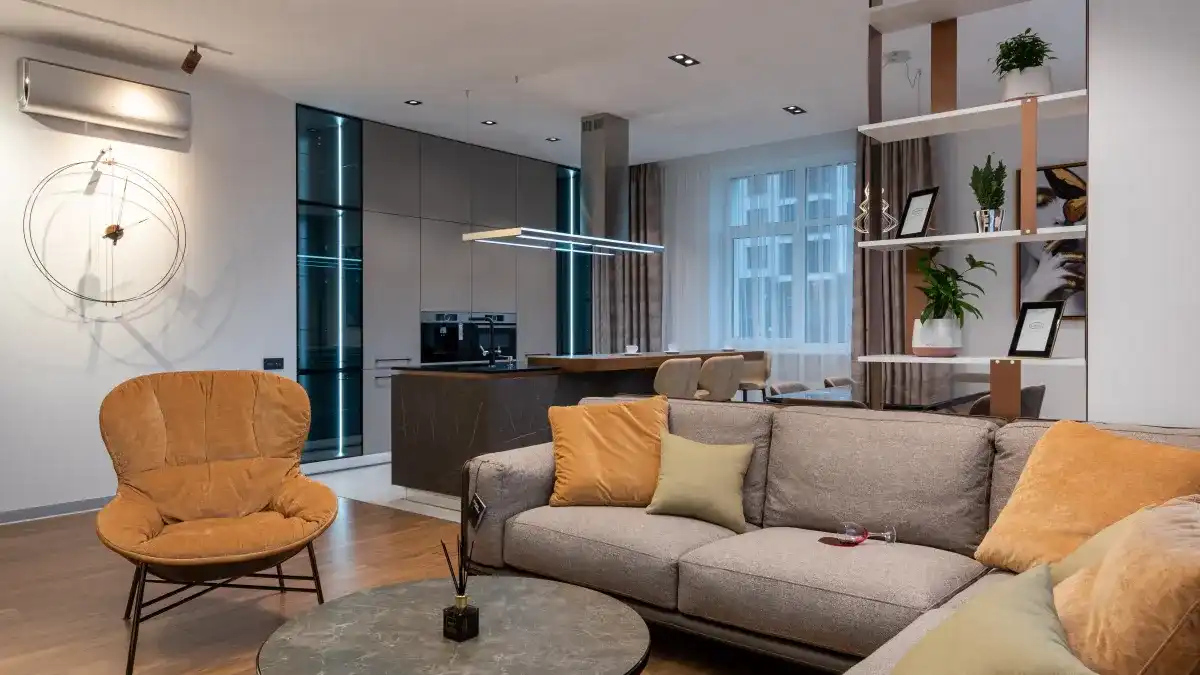
One mistake is using only the square footage from a listing or floor plan. That number can hide a hallway cutout, a vaulted ceiling, or an open doorway. The cost is weak performance in the exact room you wanted to improve. The fix is to check the room’s actual shape and, if the layout is unusual, review the purifier specs with the manufacturer or a qualified indoor air quality professional.
Another mistake is picking a purifier that barely fits the room on paper. A 160 sq ft rating for a 160 sq ft room sounds tidy, but a tidy match often leaves no room for layout problems. If the room is a bedroom with a closed door, that can be acceptable. If it is a living room with traffic flow and furniture, it is usually too tight.
A third mistake is putting the purifier in a bad location and blaming the size. A unit against a wall, behind a chair, or in a corner often loses reach. The room may not be the problem at all; the placement is. A better spot can make a modest unit perform better, but it cannot turn a too-small purifier into a large one.
A fourth mistake is assuming one purifier can cover every connected zone in an open-plan area. That is the one error that produces the most frustration. If the space stretches into another room, the purifier may only clean the area closest to it. In that case, a second unit or a larger rating is the more honest match.
When is a larger purifier the better choice?
A larger purifier is the better choice when the room is open, oddly shaped, or likely to stay busy most of the day. That is the safer pick if the room is a living room, a shared family space, or a bedroom with a high ceiling and little airflow control.
A larger unit gives you more room for error. If the purifier is rated above the room’s square footage, it can better handle furniture, open doors, or a weak placement spot. That extra margin matters most in living rooms and open-plan spaces. It also matters if you want the purifier to work harder without sounding strained all the time.
That does not mean “bigger” is always the right answer. A larger unit can take up more floor space and may be louder, especially if you run it on a higher setting. In a small bedroom, an oversized purifier may be more machine than you need. The better choice is the one that matches the room’s real air path, not just the largest number you can buy.
Use the room’s use case as the filter. Sleep space, closed door, simple layout: a closer match can work. Shared living area, open connection, or more than one doorway: size up. If the purifier’s coverage is only barely enough for the room on paper, the room’s layout should decide the final call.
FAQs
How do I size an air purifier for a room?
Measure the room in square feet, then adjust for ceiling height and layout. A 10 by 12 foot bedroom is 120 sq ft, but the same number means less in an open-plan living area than it does in a closed room. If the room has more than one doorway or a high ceiling, choosing a purifier with extra coverage is the safer move.
Does one air purifier cover an open floor plan?
Sometimes, but not always, and the answer depends on how much air the open space shares. A single unit can help in one zone of an open floor plan, but a wide kitchen-living area often acts larger than the square footage of one sitting area. If the space has few barriers, one purifier may not reach the far end well.
Can an air purifier be too small for a room?
Yes, and the sign is usually weak coverage rather than no coverage at all. A too-small purifier may still move air, but it will struggle to keep up with the room’s volume and layout. That gap is most obvious in living rooms and open spaces, where furniture and doorways make the air harder to circulate evenly.
Drafted with AI; not yet reviewed by a person.