Do Air Purifiers Help With Bathroom Moisture and Odor?
An air purifier can help with bathroom odor, but it does not fix bathroom moisture. In the context of Do Air Purifiers Help with Bathroom Moisture and…

Close-up of a fan grille
Last updated: November 28, 2026
Quick Answer: an air purifier can help with bathroom odor, but it does not fix bathroom moisture. In the context of Do Air Purifiers Help with Bathroom Moisture and Odor?, a purifier can catch some particles and reduce the stuff floating in the air, yet humidity, wet walls, and steam still need ventilation or drying.
Key takeaways
- An air purifier can make a bathroom smell cleaner for a while, but it does not pull water out of the air.
- Moisture control starts with a vent fan, an open door, and getting wet surfaces dry faster.
- Odor control works best when the smell is from particles or aerosols in the air, not from a hidden leak or damp grout.
- Small bathrooms can benefit from a purifier if the unit fits safely in the space and can move air without getting splashed.
- If the room stays damp after showers, treat that as a ventilation problem first, not a purifier problem; if you are unsure, consult a qualified HVAC or mold professional. The EPA’s Guide to Air Cleaners in the Home and its Mold Cleanup in Your Home guidance both point back to moisture control.
What does a bathroom air purifier actually do?
A bathroom air purifier mainly helps with odor, airborne particles, and stale air, not with humidity. In plain terms, it can make the room feel less stuffy after use, but it will not dry towels, tile, or grout.
That matters because bathroom moisture and bathroom odor are not the same problem. Steam from a shower raises humidity; a purifier does not remove that water vapor. A purifier can still help with smells from cleaning products, toilet use, or aerosolized particles, but the effect is limited if the room has no airflow.
The clean-air idea is simple: air moves through a filter, and some of what is floating in the room gets trapped. The EPA’s Guide to Air Cleaners in the Home explains that portable air cleaners are used to reduce airborne particles, not to replace ventilation. For mold concerns, the EPA’s guidance on Mold Cleanup in Your Home is clear that moisture control is the real fix. The CDC also notes that mold grows where there is moisture, so drying the room matters more than filtering the air alone.
In a bathroom, that means an air purifier is a side tool, not the main tool. If the room has a working vent fan, the fan usually does the heavy lifting for steam and lingering odor. If the bathroom does not have a fan, a purifier may still help the air smell cleaner, but the room can still stay damp long enough to cause trouble.
Will it help with bathroom smell?
Yes, an air purifier can help with bathroom smell, but only for certain kinds of odor. It works best when the smell comes from particles in the air, not from moisture trapped in materials or a plumbing problem.
That distinction matters. A quick burst of odor after flushing or after using strong cleaning spray may fade faster with a purifier running. A musty smell from damp drywall, a bad drain trap, or mold on caulk will not go away just because the room has a filter running in the corner.
A purifier is strongest when the bathroom is small and the odor source is brief. It is weakest when the smell keeps coming back because something in the room is wet, dirty, or damaged. If the smell returns after every shower, the problem is usually moisture buildup, not the lack of filtered air.
A simple way to think about it is this: a purifier can clean the air that passes through it. It cannot clean the source of the odor if the source is in the wall, under the sink, or in a drain. That is why odor control in bathrooms often works best as a two-step job: remove the source, then move the air.
Can an air purifier fix bathroom moisture?
No, an air purifier cannot fix bathroom moisture because it does not remove humidity from the air. Water vapor from showers, baths, and wet surfaces stays in the room unless the air is moved out or dried.
That is the line most readers need to hear clearly. A purifier may make the room feel fresher, but it will not stop condensation on mirrors, moisture on tile, or damp air hanging around after a hot shower. If the bathroom stays wet for a long time, the room can become a mold risk even if the air smells cleaner.
The best moisture control is usually mechanical ventilation, but the right setup depends on the room. A vent fan, a door that can stay open when privacy allows, and quick cleanup of standing water matter more than any filter. The EPA mold guidance emphasizes removing moisture fast, because mold needs damp conditions to grow.
Here is the practical split:
| Bathroom problem | Air purifier helps? | What works better |
|---|---|---|
| Shower steam | No | Vent fan, door open, faster drying |
| Musty smell from damp surfaces | Sometimes a little | Drying the room, fixing the moisture source |
| Toilet or cleaning spray odor | Yes, somewhat | Air movement plus source control |
| Mold risk from chronic dampness | No | Moisture control and cleanup |
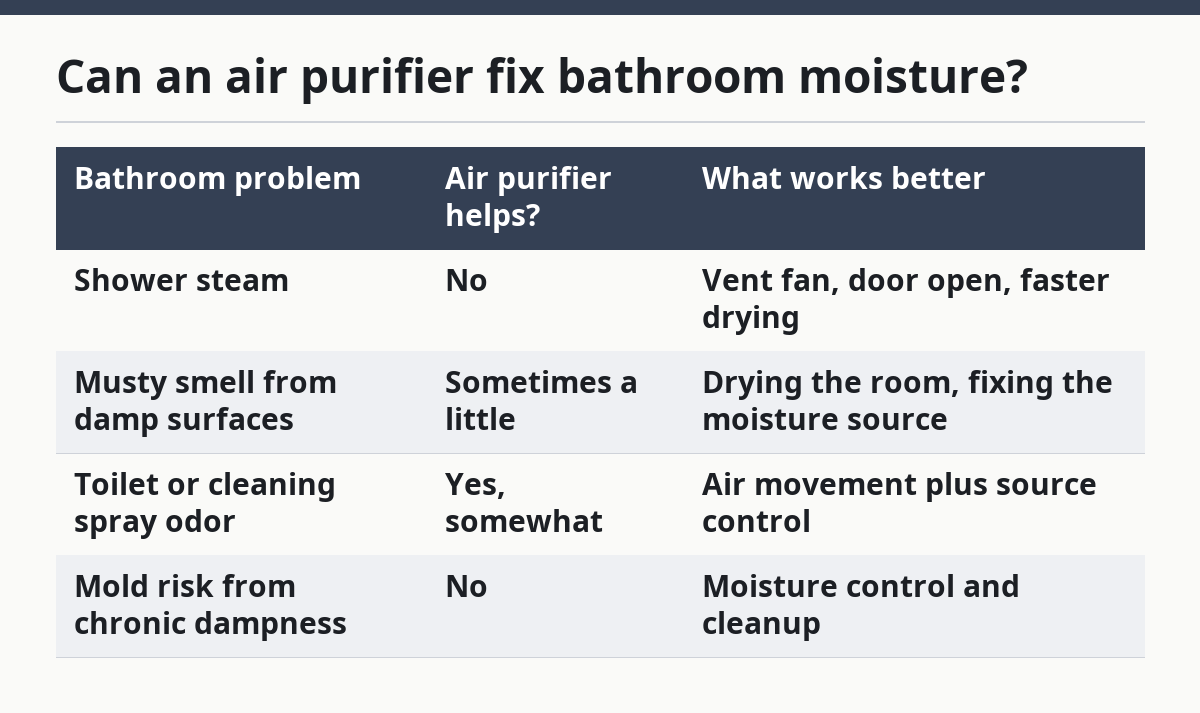
An air purifier is still useful in a bathroom when odor is the annoyance and the moisture problem is already under control. It is not a substitute for drying out the room. The EPA’s mold guidance and the CDC’s mold pages both emphasize moisture removal first.
How should you use one in a small bathroom?
Use an air purifier in a small bathroom only if you place it where it can move air freely and stay away from splashes. The goal is cleaner air, not a wet appliance sitting next to a shower curtain.
A small room gives the purifier a better chance to help with odor, but it also raises the risk of poor placement. Bathrooms are tight, humid, and full of hard surfaces that reflect air rather than absorb it. That means the purifier needs a clear spot and regular cleaning.
A practical setup looks like this:
- Put the purifier in the driest part of the room. Keep it off the floor if there is any splash risk, and choose a spot with open airflow rather than a cramped corner. The result is steadier air movement.
- Run it when the room is in use and for a while after. After a shower, let it keep going long enough to clear some lingering smell while the vent fan does the moisture work. The room should smell less stale within a short period, not stay muggy.
- Use the vent fan at the same time if there is one. The fan handles steam and humidity; the purifier handles some airborne odor and particles. The combination is stronger than either one alone.
- Dry the wet surfaces first. Wipe the mirror, sink, and any standing water so the room starts with less moisture. The purifier then has less stale air to deal with.
- Clean the filter on schedule. A clogged filter can reduce airflow and let trapped odor build up inside the unit. A bathroom is a high-use room, so filter care matters more than in a spare bedroom.
If the bathroom is very small, a compact unit may fit better than a large one. The key is not size alone; it is whether the purifier can sit safely and move air without getting blasted by shower spray.
What mistakes make people think the purifier failed?
The biggest mistake is expecting a purifier to solve a moisture problem by itself. That leads to a damp room, a lingering musty smell, and the false idea that the unit is weak.
Another common mistake is placing the purifier too close to the shower or tub. That can expose the unit to splash and steam, which is rough on any electrical appliance. It may also make the filter clog faster because the room’s damp air keeps carrying residue toward the intake.
A third mistake is skipping the fan because the purifier is already running. That costs you the one tool that actually moves humid air out of the room. If the bathroom has a vent fan, the fan should still be part of the routine, even on days when the smell is the main complaint.
There is also a trap in chasing odor without checking the source. A purifier can mask some smell, but it cannot fix a slow leak, a bad drain, or mildew in caulk. That mistake costs time, and it lets the real issue get worse.
The better habit is to treat the purifier as a clean-air helper, not a moisture plan; if the problem persists, consult a qualified professional to check ventilation or hidden moisture. If the mirror fogs for a long time, the towel stays damp all day, or the room smells musty even when empty, the room needs ventilation or repair, not just filtration.
When is a bathroom air purifier worth it?
A bathroom air purifier is worth it when odor is the main problem and the moisture problem is already managed. It can be a useful add-on in a small bathroom, a guest bath, or a room that picks up smells quickly and clears slowly.
It is most useful in bathrooms that already have some airflow and only need extra help with stale air. A room with a functioning vent fan, regular cleaning, and no chronic dampness is a better fit than a bathroom that stays wet for hours. In the first case, the purifier can improve comfort. In the second, it may only hide the symptoms.
It is not a good fix for bathrooms with persistent humidity, peeling paint, or recurring mold spots. Those are signs that the room needs moisture control first. An air purifier can sit in that room and still fail to solve the reason the air smells bad.
It is also not the answer if the main goal is to dry the room faster after every shower. That job belongs to airflow and drying, not filtration. The EPA’s home air-cleaner guidance and mold guidance both point back to the same idea: clean air helps, but water control matters more. The CDC’s mold guidance makes the same basic point in plain language: reduce moisture, then clean.
If the bathroom issue is mostly smell, a purifier can earn its space. If the issue is dampness, it is the wrong tool to lead with.
FAQ
Can I put an air purifier in a bathroom?
Yes, if the bathroom is dry enough for safe use and the purifier can stay away from splash zones. It makes more sense in a bathroom that needs odor help than in one with constant steam or standing moisture. A vent fan still matters more for humidity.
Will an air purifier help with bathroom smell?
Yes, it can help with some bathroom smell, especially short-lived odors and airborne particles. It will not remove smells coming from a leak, a drain issue, or mold in damp materials. Those sources need to be fixed first.
Do air purifiers help with moisture?
No, air purifiers do not remove bathroom moisture because they are not built to pull water vapor out of the air. A vent fan, open airflow, and fast drying are the tools that matter for humidity control. If moisture keeps building up, the room needs better ventilation, not just filtration.
Drafted with AI; not yet reviewed by a person.