Air Purifier Placement for Bedrooms, Living Rooms, and Offices
In most rooms, the best placement is one clear spot with open airflow and no furniture blocking the intake or outlet. In the topic of Air Purifier…
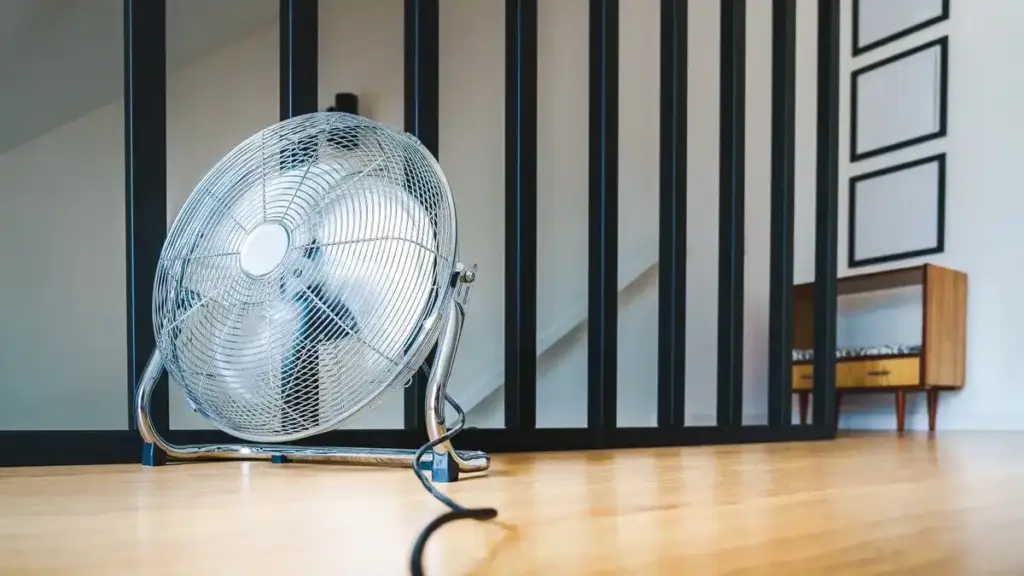
Large floor fan in a room
Last updated: November 27, 2026
Quick answer: in most rooms, the best placement is one clear spot with open airflow and no furniture blocking the intake or outlet. In the topic of Air Purifier Placement for Best Results in Bedrooms, Living Rooms, and Offices, that usually means near the bed in a bedroom, in an open area in a living room, and beside the desk in a home office if the space stays uncluttered.
Key takeaways
- Put the purifier where room air already moves, not where furniture traps it.
- Bedroom placement should support sleep without pointing the outlet straight at your face.
- Living rooms usually need the most open placement because chairs, sofas, and tables block flow.
- In a home office, keep the unit close enough to matter but far enough from the desk to avoid clutter and noise.
- If one purifier has to cover more than one room, expect weaker results unless doors stay open.
What is the best air purifier placement?
In most rooms, the best air purifier placement is a clear spot with open airflow, enough wall clearance, and a path for room air to reach the intake and leave the outlet. That simple rule matters more than any “perfect” location, because the purifier can only clean the air it can pull through itself.
A good placement usually beats a bigger machine in a bad spot. The EPA’s indoor air guidance on air cleaners and the American Lung Association’s advice on air purifier use both point to the same idea: keep the unit unobstructed so it can move air through the room, not just churn air beside a wall. For more details, see the EPA’s Guide to Air Cleaners in the Home and the American Lung Association’s Air Purifiers guidance. A purifier blocked by a sofa arm or hidden behind curtains may run all day and still miss much of the room.
The easiest way to think about placement is to follow the airflow path. Air should enter the purifier without bumping into fabric, wood, or a stack of boxes. Clean air should leave the outlet into the open room, not into the back of a chair. That matters in bedrooms, living rooms, and offices for different reasons, which is why one placement rule does not fit every room.
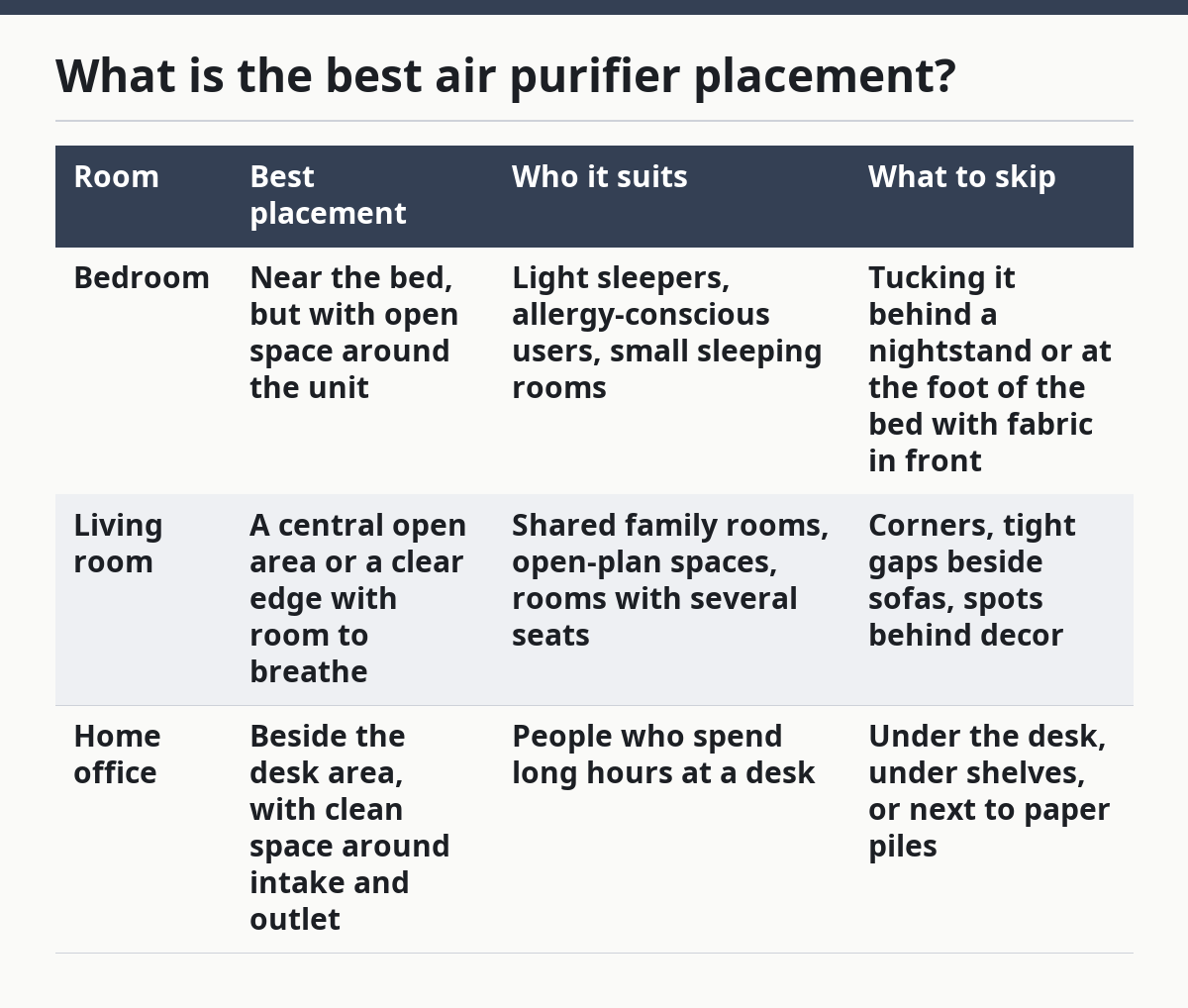
Here is the quick comparison.
| Room | Best placement | Who it suits | What to skip |
|---|---|---|---|
| Bedroom | Near the bed, but with open space around the unit | Light sleepers, allergy-conscious users, small sleeping rooms | Tucking it behind a nightstand or at the foot of the bed with fabric in front |
| Living room | A central open area or a clear edge with room to breathe | Shared family rooms, open-plan spaces, rooms with several seats | Corners, tight gaps beside sofas, spots behind decor |
| Home office | Beside the desk area, with clean space around intake and outlet | People who spend long hours at a desk | Under the desk, under shelves, or next to paper piles |
This article is about placement strategy, not specs. If a reader still needs help choosing the right unit, the buying decisions hub can handle that next step. See also bedroom air purifier placement, living room placement, and home office placement.
How should an air purifier go in a bedroom?
A bedroom air purifier should go close enough to support the sleeping area, but not so close that the outlet blows directly across the pillow. That balance gives cleaner air where it matters while reducing the chance of a draft, noise annoyance, or blocked intake.
The usual bedroom mistake is hiding the purifier by the bed. A nightstand, bed skirt, blanket, or wall panel can choke intake or push the outlet against a surface. A better setup is a spot with clear space on all sides, with the front or outlet facing into the room rather than into bedding. If the unit has a top outlet, that helps because the clean air can rise and spread instead of hitting the mattress.
A practical setup can be simple:
- Place the purifier on the floor or a stable low surface near the bed, but not pressed against it. The goal is open room air, not a tucked-away nook.
- Leave several inches of open space around the intake and outlet. The purifier should not be boxed in by curtains, dressers, or a wall corner.
- Aim the outlet toward the middle of the room, not straight at the pillow. The room should feel fresh without a direct draft.
- Keep the bedspread, laundry basket, and loose clothes away from the unit. Clutter near the intake cuts down airflow fast.
- If the bedroom is small, favor the side of the room with the clearest path to the door or open floor. That gives the clean air a wider loop.
For a bedroom, quiet often matters almost as much as placement. A purifier that sits right beside the headboard may be close to the bed, but it can be distracting if the fan setting is too high. A slightly farther spot with open airflow is usually a better trade-off.
This placement is a poor fit for people who want the unit hidden out of sight at any cost. A concealed purifier often becomes a compromised purifier.
How should an air purifier go in a living room?
A living room air purifier should sit where the main room air can circulate around it, usually in an open zone rather than against a crowded wall. Living rooms are full of soft furniture, coffee tables, lamps, baskets, and curtains, and all of that creates dead air if the purifier is buried among them.
A living room usually needs the most careful placement because the room shape is less predictable than a bedroom. In a square room, a clear central edge may work well. In an open-plan layout, the purifier often does better near the side of the area you use most, where the airflow can reach both seating and walkways without being blocked by a sofa back or TV console.
The common mistake here is treating the living room like a decoration problem, and if you are unsure about a permanent setup, consider checking a room planner or asking a ventilation professional before moving furniture around the purifier. A purifier tucked beside a plant stand or hidden between two chairs may look tidy, but the intake and outlet get starved. That costs performance, especially when several people are in the room and the air keeps mixing with movement, cooking odors, pet hair, or dust from fabric surfaces. The American Lung Association’s air purifier guidance is useful here because it treats placement as part of normal room use, not as an afterthought.
A good living room setup usually follows this order:
- Find the part of the room with the least furniture around it. Open floor beats decorative corners.
- Keep the purifier away from thick curtains, sofa arms, and large tables that can block the airflow path.
- Aim the outlet toward the larger open part of the room, not into the back of a couch.
- If the room has two seating zones, place the purifier where the air can move between them instead of trapping it in just one corner.
- Recheck the setup after moving furniture. A new side table can create a bad airflow block overnight.
Living rooms can also be the right place for more than one purifier if the room is long or split by furniture. One unit in a corner and another across the room may work better than either unit alone in a poor location, but that only helps if both have open air around them. For related setup tips, see living room air purifier placement and the best placement overview.
What changes in a home office?
A home office air purifier should sit near the desk area, but not under it and not crowded by monitor cables, boxes, or file stacks. The office goal is steady clean air during long work sessions, which means the purifier needs room to breathe without turning the desk into clutter.
A desk creates easy placement traps. The space under the desk may look convenient, yet it often blocks both intake and outlet. A shelf above the purifier can do the same thing. A printer, shredder, or paper tray beside it can clog the flow path and add noise. The better move is usually to place the unit beside the desk or just behind the chair, in a spot where it can pull air from the work zone and push it back out across the room.
For office placement, think in terms of task zones:
- Keep the purifier off the exact desk surface unless the desk is unusually large and the unit is small and stable.
- Leave the front and sides clear so papers do not flutter into the intake.
- Avoid placing it right next to your feet if it makes noise or vibrates.
- If the office is also a bedroom corner or guest room, prioritize the part of the room you spend the most time in.
A home office setup is not ideal for anyone who wants the purifier hidden behind furniture. That can make the room look cleaner, but it often weakens the airflow path too much to matter.
The American Lung Association’s air purifier guidance is useful here because it treats placement as part of normal room use, not as an afterthought. An office is exactly the kind of room where a small placement mistake gets repeated for hours at a time. For more related advice, see home office placement and room airflow basics.
How far from the wall should it be?
An air purifier should have enough wall clearance to keep the intake and outlet open, which usually means more than a hand’s width and often a clear gap that lets air move freely around the unit. The exact distance depends on the model, so the manual matters, but the rule is simple: if the wall changes how air reaches the purifier, the purifier is too close.
This is where generic advice goes wrong. People hear “not against the wall” and assume a tiny gap is enough. It often is not. A thin gap may still trap the intake if the back of the purifier faces a wall or if a baseboard, curtain, or cabinet edge blocks the lower half of the unit. The purifier may run normally while the room air barely changes.
The same rule applies to corners. A corner can look safe, tidy, and out of the way, but it usually traps the airflow path. Air moves in from only one or two directions instead of across the room, so the purifier ends up cleaning a smaller pocket of air. That is why a clearer edge, mid-wall position, or open floor zone often works better than a neat corner setup.
If the room is small and the only open spot is near a wall, the better choice is the spot with the least obstruction, not the one that looks most symmetrical. Furniture layout matters more than room symmetry.
What is the biggest placement mistake?
The biggest placement mistake is putting the air purifier where it looks convenient instead of where air can move. That mistake costs performance in every room, but it shows up fastest in bedrooms and offices, where a fixed seat or bed can tempt people to place the unit in a blocked spot.
The second mistake is expecting one purifier to fix two rooms at once with a door closed between them. A purifier in the bedroom does little for the hallway office if the door stays shut, and a living room unit cannot clean a bedroom that never gets airflow from the main space. Multiple rooms need either open doors or separate units placed for each space.
Other common mistakes are easy to spot:
- A purifier behind a chair or sofa arm loses its intake path.
- A purifier in a corner gets trapped air and weaker spread.
- A purifier under a desk or shelf collects dust and blocks flow.
- A purifier beside a bed with the outlet aimed straight at the pillow can feel annoying even when the air is cleaner.
The fix is not complicated. Move the unit where the room is most open, then let the furniture work around the purifier instead of forcing the purifier to fit the furniture plan. That is the same rule whether the room is 10 feet by 12 feet or a long open-plan space.
How should one purifier handle multiple rooms?
One purifier should handle multiple rooms only when those rooms share open airflow, because closed doors cut the effect fast. If the bedroom, living room, and office are all separate spaces, the purifier should usually live in the room where the problem is most constant, then move with the person or open doors to help air pass through.
This is where placement strategy becomes a trade-off, not a perfect solution. A single purifier placed in the hallway may look efficient, but it often serves no room well enough to matter. A purifier in the bedroom may help sleep air more than the living room. A purifier in the office may support long desk time but leave the bedroom untouched.
A useful rule is to choose the room with the longest daily use or the most closed-door time. If sleep is the priority, the bedroom comes first. If the day is spent at a desk, the office may matter more. If the home is mostly one shared room, the living room can be the best central point, as long as the airflow path stays open.
This is also the point where placement and buying decisions meet. The wrong unit in the right room still disappoints, and the right unit in the wrong room still underperforms. Placement is the first fix because it costs nothing and often improves results right away. If the room still needs more help after that, the next step is choosing a purifier that matches the space and use case.
Which placement fits your room best?
The best placement depends on the room’s furniture, not just its label, but the room type gives the first clue. Bedrooms want quiet, clean airflow near the sleeping zone. Living rooms want open circulation through shared seating. Home offices want a clear path beside the desk without turning the workspace into a clutter trap.
For quick decisions, use this rule: bedroom near the bed but not at the pillow, living room in the open part of the room, office beside the desk with clear space around it. If that placement feels awkward, it usually means the furniture layout needs a small shift, not that the purifier belongs in a corner. The best results come from letting airflow lead the room, not furniture habits.
Drafted with AI; not yet reviewed by a person.