Air Purifier Features for Pets That Actually Matter
For most pet homes, the three features that matter most are a true HEPA filter for dander, a strong pre-filter for hair, and activated carbon for odor.…
Air Purifier Features for Pets That Actually Matter
Last updated: November 28, 2026
Quick answer: for most pet homes, the three features that matter most are a true HEPA filter for dander, a strong pre-filter for hair, and activated carbon for odor. This guide on Air Purifier Features for Pets: What Matters for Dander, Hair, and Odor focuses on the parts that affect everyday results in rooms with pets. If a purifier skips the pre-filter or uses only a light carbon layer, it may still move air, but it will not handle fur, flakes, and smell as well as a pet-focused air purifier.
Key takeaways
- Dander is the fine stuff that stays airborne; hair is the big stuff that clogs filters.
- A pre-filter protects the main filter from pet hair and helps the unit last longer.
- Activated carbon is the feature that helps most with litter box, wet-dog, and cage odors.
- A HEPA filter matters for airborne particles, but it is not the piece that removes smell.
- The wrong setup is often a purifier with weak odor control and no easy-to-clean pre-filter.
What should a pet air purifier have?
A pet air purifier should have three parts that do different jobs: a pre-filter, a HEPA filter, and an activated carbon filter. That mix covers the common pet problems in a home: floating dander, shed hair, and odor from litter, bedding, saliva, or accidents.
The pre-filter is the first line of defense. It catches visible pet hair before that hair reaches the main filter, which matters because hair can clog a purifier long before the air cleaning part wears out. A washable or easy-to-vacuum pre-filter is a big plus for homes with heavy shedding.
The HEPA filter is the part that helps with tiny airborne particles such as pet dander. Dander is not the same as hair. Hair is easy to see; dander is the lighter skin material and debris that can stay suspended longer and spread farther.
The activated carbon filter is the part that helps with odor. If a purifier does not mention activated carbon, it may still help with particles, but it will usually do much less for smell. That is why a unit that looks strong on paper can still disappoint in a room with a litter box or a dog bed.
For a general buying frame, the hub on air purifier buying decisions is the right next stop. This page stays focused on the pet-specific pieces that change the day-to-day result.
Which filter matters most for pet dander?
A HEPA filter matters most for pet dander because it is the part meant for small airborne particles. The EPA explains that portable air cleaners can help reduce indoor particle levels, and HEPA filtration is the common feature people look for when the target is fine dust, pollen, and dander. See the EPA’s guidance on indoor air cleaners and filters: https://www.epa.gov/indoor-air-quality-iaq/air-cleaners-and-air-filters-home
Dander is the pet issue that people often underestimate. It is light enough to drift through a room and settle on fabric, shelves, and bedding. A purifier with only a carbon filter may help with smell, but it will not do the same job on airborne dander.
A useful way to think about it is this: hair clogs, dander floats, odor lingers. That is why the HEPA filter is the core filter for allergy-style pet cleanup, while the pre-filter and carbon layer do the support work.
One common mistake is buying for “allergens” without checking for a true HEPA filter. Some products use broad language and still leave out the filter type that best captures the fine particles tied to pet dander. That mistake costs time, because the room may smell fresher while the sneezing trigger stays in the air.
If the main problem is dander in a bedroom or living room, a purifier with a true HEPA filter is usually the first feature to insist on. If the issue is mostly odor, HEPA still helps, but it is not the whole answer.
How does an air purifier handle pet hair?
An air purifier handles pet hair best through a pre-filter, not the main HEPA filter. Hair is large and heavy compared with dander, so the first screen or mesh layer should catch it before it reaches the finer filter.
This is where many pet owners get frustrated. A purifier can have a good HEPA stage and still become annoying if it has no easy-to-clean pre-filter. Hair builds up fast near vents, on grilles, and on the first layer of the machine. If that layer is awkward to remove, the unit becomes more work than it should be.
The most practical pre-filter is one that is easy to access and clean. A washable mesh or a layer you can vacuum without opening the whole machine makes more sense for homes with cats that shed in spring or dogs that blow coat seasonally. A purifier with a hidden or tiny pre-filter can still work, but it often needs more hands-on cleaning.
Here is the simplest way to think about hair control:
- Place the purifier near the pet zone. Put it in the room where the hair gathers most, such as a bedroom, living room, or near a crate. The closer it is to the source, the more hair it can catch before it spreads.
- Choose a visible pre-filter. A mesh layer or front screen should be easy to remove and clean. That keeps hair from loading up inside the machine.
- Clean the pre-filter on a regular rhythm. A quick vacuum or rinse, depending on the design, helps keep airflow steady.
- Watch airflow after cleaning. If the unit sounds strained or the room still looks dusty, hair may be blocking the intake area.
- Do not rely on the main filter for hair. The HEPA filter is for fine particles; the pre-filter should take the fur load.
A pet-focused purifier without a good pre-filter is the wrong pick for heavy shedders. It may still clean the air, but it will make maintenance harder and may lose performance sooner.
What helps with pet odor?
Activated carbon is the feature that helps most with pet odor. It is the filter material used to absorb gases and smells, which is why it matters for litter boxes, wet fur, kennel areas, and the places where accidents happen.
Odor control is the area where shoppers often get misled by marketing. A purifier can sound powerful and still have only a thin carbon layer. That setup may do little for smell, even if it removes particles well. If odor is the main complaint, carbon content matters more than fancy casing or extra buttons.
A bigger carbon stage can improve odor control, but the effect depends on the amount and quality of carbon, how air flows through it, and how quickly the filter loads up. That is why the safer rule is simple: look for a purifier that clearly names an activated carbon filter, not just “odor reduction” on the box. That phrasing alone does not tell you much.
The trade-off is clear. Carbon helps with smell, but it does not replace the HEPA filter. If you buy for odor alone, you may still leave dander in the air. If you buy for particles alone, the room may still smell like pets. A pet home usually needs both.
The American Lung Association’s guidance on home air cleaning is useful here too, especially for the difference between particle capture and odor control: https://www.lung.org/clean-air/at-home/indoor-air-pollutants/air-cleaners
Which feature should you prioritize first?
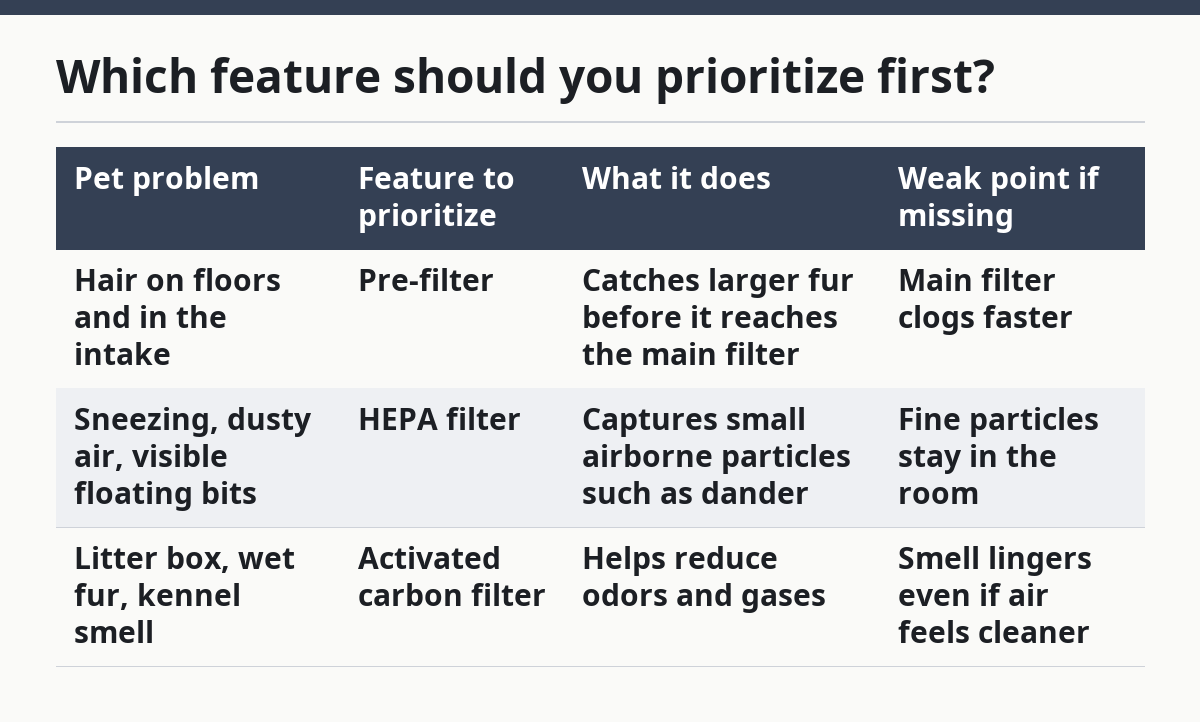
The right order is pre-filter first for heavy hair, HEPA first for dander, and activated carbon first for smell. The best pet purifier is usually not the one with the longest feature list; it is the one that matches the problem in the room.
| Pet problem | Feature to prioritize | What it does | Weak point if missing |
|---|---|---|---|
| Hair on floors and in the intake | Pre-filter | Catches larger fur before it reaches the main filter | Main filter clogs faster |
| Sneezing, dusty air, visible floating bits | HEPA filter | Captures small airborne particles such as dander | Fine particles stay in the room |
| Litter box, wet fur, kennel smell | Activated carbon filter | Helps reduce odors and gases | Smell lingers even if air feels cleaner |
If the home has both cats and dogs, the air purifier should not be chosen as if all pet problems are the same. A litter box room needs more odor help than a hallway. A shedding dog in the living room needs more pre-filter support than a cat that mostly stays on furniture.
This is also the point where a “best overall” label can be misleading. A purifier that is great for dander may be frustrating for odor. A purifier that handles odor may still let hair pile up at the intake. The best choice depends on which problem you notice first when you walk into the room.
How do you use a pet purifier without making maintenance worse?
Because pet homes load filters faster than low-traffic rooms, you use a pet purifier best by keeping the intake clear, cleaning the pre-filter often, and treating the carbon and HEPA layers as separate jobs.
A simple maintenance routine looks like this:
- Set the purifier where air moves through the pet area. A spot near a bed, couch, crate, or litter area works better than a hidden corner. You want the intake to meet the mess, not miss it.
- Check the pre-filter first. If it has visible hair, clean it before the build-up reaches the inner filter.
- Keep the intake and exit grilles open. A blocked vent reduces airflow and lowers the amount of air the machine can process.
- Use the odor layer for odor, not dust. Activated carbon is there for smell control, so do not judge it by hair collection.
- Replace or refresh filters as directed by the maker. Filter life varies by use, and a home with multiple pets loads the system faster than a quiet room. For specific replacement intervals, follow the manufacturer and, if needed, ask a qualified indoor air professional.
A common mistake is waiting until the room smells bad or the purifier sounds louder before cleaning it. By then, the pre-filter may already be packed with hair. That costs airflow and usually makes the machine work harder than it needs to.
The honest drawback of pet purifiers is maintenance. If you want one that stays useful, choose a model with easy access to the pre-filter and a clear path to the main filter. If you hate cleaning filters, pet ownership and air cleaning will both feel more annoying than they should.
Who is a pet air purifier not for?
A pet air purifier is not the right fix if the main problem is a dirty room rather than airborne particles and smell. If hair is covering furniture because the house needs vacuuming, a purifier will not solve that on its own. It can help with what stays in the air, not what already sits on the floor.
It is also not the right buy if odor control is your only goal and you do not want to maintain a carbon filter. Activated carbon works, but it is not magic, and it does not keep working forever without care. A purifier with weak carbon is a poor fit for stubborn pet smells.
For homes that only want a small amount of help in one room, a basic unit may be enough. For homes with multiple pets, litter boxes, or heavy shedding, the weak version usually becomes a regret. That is because pet use is harder on filters than a general living room setup.
In short, the right pet purifier is the one that matches the mess. If the mess is hair, start with the pre-filter. If it is dander, insist on HEPA. If it is smell, make sure activated carbon is more than a line in the product copy.
Do air purifiers help with pet dander?
Yes, air purifiers can help with pet dander when they use a true HEPA filter and are placed in the room where the pet spends time. Dander is a small airborne particle, so the filter has to be built for fine capture rather than just airflow.
The catch is that a purifier does not remove dander already embedded in fabric or carpet. It helps with what is floating in the air, so it works best alongside regular vacuuming and basic cleaning. For room-by-room cleaning, pair it with HEPA vacuum guidance and routine indoor air quality habits.
What filter is best for pet odor?
An activated carbon filter is the best feature for pet odor. It is the part designed to help with smells from litter boxes, wet fur, cages, and accidents.
A HEPA filter may still be useful for particles, but it is not the main odor tool. If smell is the main complaint, look for a purifier that clearly includes activated carbon rather than one that only promises fresh air.
Do I need an air purifier if I have cats or dogs?
You do not need one in every pet home, but it can help a lot if you notice dander, hair in the air, or lingering smell in one room. A purifier is most useful in bedrooms, living rooms, and spaces near litter boxes or pet beds.
If your main problem is floor cleanup, a vacuum and regular washing may matter more. If the problem is what floats, smells, and settles back down after cleaning, a pet-focused air purifier is worth a closer look. For people comparing room options, a pet odor control page and a room air purifier guide can help narrow the choice.
Drafted with AI; not yet reviewed by a person.