Where Not to Place an Air Purifier (and Why It Matters)
Where not to place a portable air purifier: corners, furniture, thick carpet, heat sources, and HVAC vents, with the airflow reason behind each, per EPA.
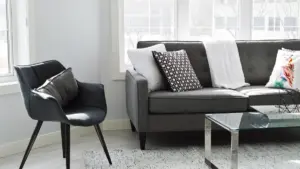
Image: ErikaWittlieb via Pixabay
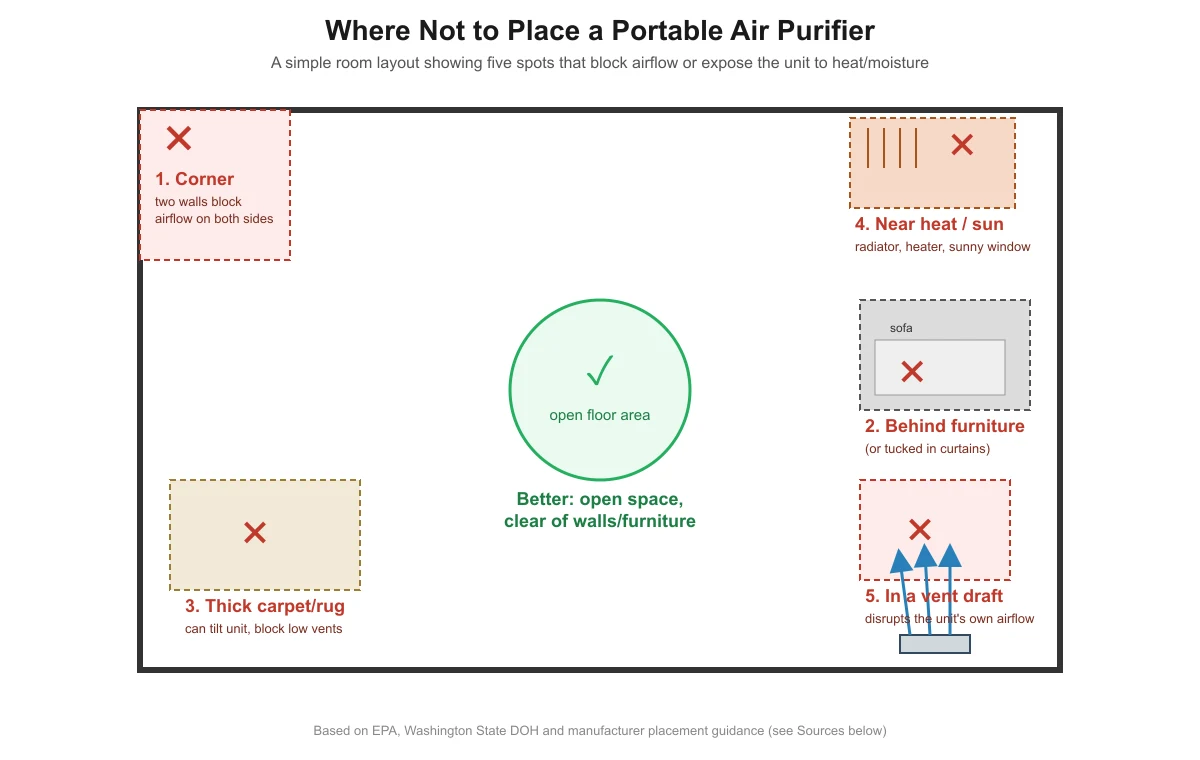
Don’t put a portable air purifier in a corner, behind or under furniture, on a thick rug, next to a heater or sunny window, or directly in the path of an HVAC supply vent. These spots either block the unit’s air intake and outlet, disrupt its airflow pattern, or expose it to heat and moisture that can damage it — according to EPA and state health department placement guidance.
- Five specific spots cause problems: corners, behind or under furniture (or tucked in curtains), thick carpet or rugs, near heat and sun, and directly in an HVAC vent’s airflow.
- Corners and furniture share the same failure mode: they block the unit’s intake or outlet, so clean air recycles locally instead of reaching the room — a mechanism EPA’s technical summary describes as short-circuiting.
- A supply-vent draft or a nearby exhaust vent can disturb the unit’s own airflow or pull newly cleaned air straight back out of the room, per Washington State health department guidance.
- Heat, direct sun, and high humidity are a different kind of problem: manufacturer instructions warn these can damage the housing, electronics, and filter rather than block airflow.
- For the full spec checklist when choosing a unit in the first place, see our air purifier buying guide.
Why does where you put an air purifier matter?
A portable air purifier’s clean air delivery rate (CADR) is measured in a lab with nothing blocking the unit. In a real room, where you put it decides how much of that rated airflow actually reaches you. The EPA’s technical summary on residential air cleaners puts it this way: place a unit “so that their clean air reaches the breathing zone of occupants as directly as possible, without obstruction from furnishings.” Otherwise, the EPA notes, a phenomenon it calls short-circuiting can occur, where the output flow never reaches the intended area and the unit ends up reprocessing the same small pocket of air instead of drawing from the room.
The same EPA document gives a sense of scale for why restricted airflow matters. A filter that removes 99 percent of what passes through it is still only as effective as the air actually moving through it. EPA’s example: a unit moving 10 cubic feet per minute (cfm) in a typical room is about 10 times less effective than the same filter moving 100 cfm. Placement that chokes off airflow has much the same effect as buying a weaker unit.
Where should you not place an air purifier?
The table below lists five specific spots, paired with the airflow or safety reason each one causes problems, based on EPA, Washington State Department of Health, and manufacturer placement guidance.
| Spot to avoid | Why it hurts performance or the unit | Guidance it’s based on |
|---|---|---|
| An inside corner, where two walls meet | Two walls on adjacent sides restrict the air path on two sides at once instead of one. EPA guidance directs owners to avoid locations where walls and other obstructions will block the intake and outlet; a corner is that same problem doubled, which is part of what can lead to short-circuiting. | EPA Residential Air Cleaners technical summary; EPA Guide to Air Cleaners in the Home |
| Under, or directly behind, furniture — or tucked behind curtains | EPA’s consumer guide is specific on this point: “Keep air cleaners away from curtains and anything that might block airflow.” A blocked intake or outlet can’t move the volume of air the unit’s CADR rating assumes, so less of that rated clean air actually reaches the room. | EPA Guide to Air Cleaners in the Home |
| On a thick, deep-pile carpet or soft rug | Many floor-standing purifiers sit on short feet or pull intake air low on the body. A thick, soft carpet can tilt the unit off level or reduce clearance under those lower vents. This is general reasoning about common bottom- and side-intake designs, not a numbered test result — check your own unit’s manual for its intake location. | General reasoning based on common portable air purifier design; rule of thumb, not a cited figure |
| Right next to a heater or radiator, in direct sun, or in a very humid room | This is a different failure mode than airflow blocking — it’s about protecting the unit itself. Manufacturer setup instructions direct owners to keep the unit away from heaters and radiators, out of direct sunlight, and to avoid very humid rooms, to protect the housing, electronics, and filter material from heat and moisture. | Shark HP300 Series Air Purifier Owner’s Guide (manufacturer manual) |
| Directly in the blast of an HVAC supply vent, or right beside an exhaust/return vent | State health guidance says to keep a portable air cleaner “away from drafts like open windows, doors, or air supply vents,” and separately recommends distance from exhaust vents too. A supply draft disturbs the unit’s own intake pattern, and a nearby exhaust vent can pull the air it just cleaned back out of the room before it does any good. | Washington State Department of Health, Using a Portable Air Cleaner |
Does a corner really make that much difference?
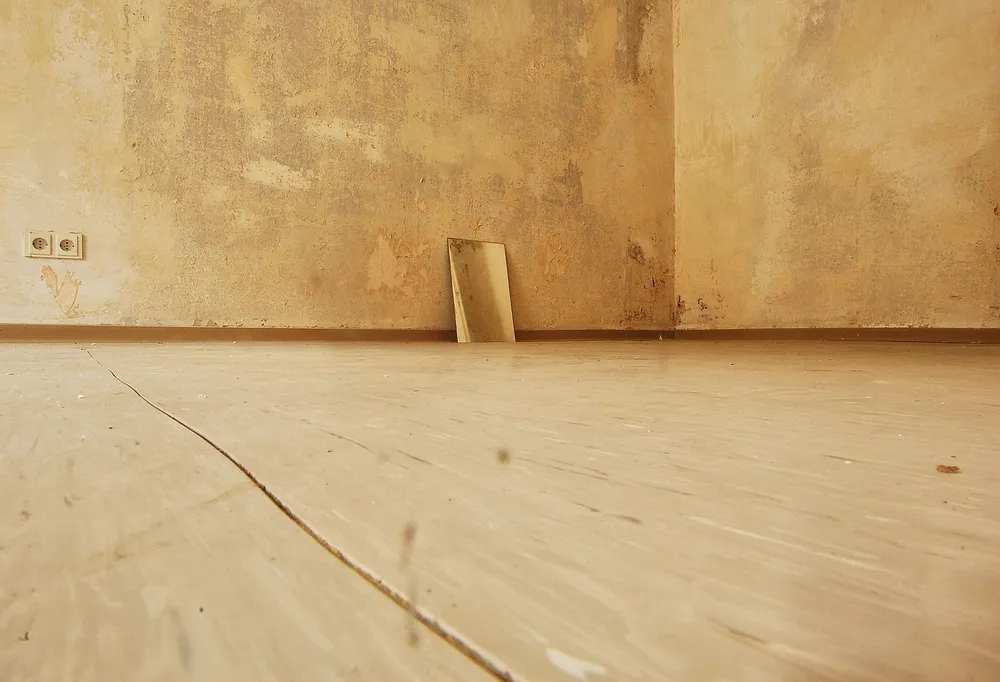
Yes, because a corner stacks the same problem EPA describes for a single wall — twice. One wall near an intake or outlet already risks blocking airflow on that side; a corner does it on two adjacent sides at once, leaving the unit less open room to draw from and push clean air into. Turning the unit to face out of the corner helps some, but it doesn’t change the fact that two nearby walls still crowd the space the air needs to circulate through before it reaches you.
What about curtains and a sunny window?
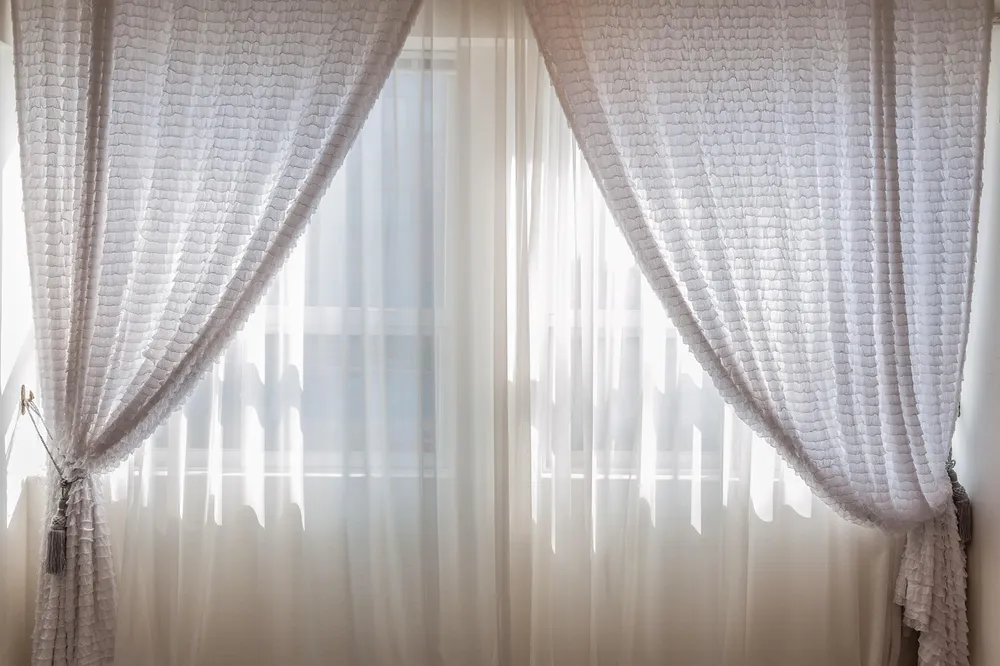
Curtains and windows combine two of the problems from the table above. EPA’s placement guidance names curtains directly as something to keep air cleaners away from, since heavy drapes can block the airflow path the same way furniture does. A sunny window adds a second, separate issue: manufacturer instructions warn against direct sunlight because UV and heat exposure over time can affect plastic housings and electronic components, not just airflow. If a window is the only open spot in a room, keep the unit a few feet back from the glass and clear of the curtain itself.
Where should you place it instead?
EPA’s guidance gives a simple starting rule: place the unit where the people who need clean air most actually spend their time, and keep it clear of anything that blocks the intake or outlet. For most homes, that means an open spot in the room you use most, a few feet from walls and furniture rather than pushed up against them. One manufacturer’s setup instructions put a specific number on this: “at least 3 inches (8 cm) away from walls and objects,” with the unit’s front panel facing away from the nearest wall. Treat that as one model’s own figure — check your own unit’s manual, since clearance requirements vary by design.
Washington State’s health department guidance adds two more practical points: run the unit with the room’s doors and windows closed, since an open window or door lets room air mix with air from the rest of the house before the unit can work on it, and keep the unit off the ground where the design allows it. EPA’s own guidance is similarly flexible about exact placement — the main requirement across every source here isn’t a single perfect spot, it’s keeping the intake and outlet clear of walls, furniture, curtains, and drafts.
Keep reading: related guides on this site
For the full spec checklist when choosing a unit in the first place — CADR, filter type, certifications, and running cost — see our air purifier buying guide. If placement changes how loud your unit sounds at different fan speeds, our air purifier noise levels guide explains what the decibel numbers actually mean.
Frequently asked questions
Can I fix a corner placement just by turning the unit to face out?
Turning the unit helps a little, but it doesn’t solve the underlying problem. Two walls meeting at a corner still crowd the space around the intake and outlet on two sides, which is the kind of obstruction EPA’s placement guidance warns against regardless of which direction the unit faces. An open spot with a few feet of clearance works better than any orientation in a tight corner.
Is it better to put an air purifier on the floor or on a table?
Either can work. EPA’s consumer guide notes that units are commonly designed for either floor or tabletop placement, and either way, the airflow just needs to stay unobstructed. Washington State’s health department guidance adds a preference for keeping the unit off the ground where the design allows it, since that can help clean air reach the breathing zone more directly.
Does it matter if the air purifier is near an open window?
It can. An open window creates a draft similar to an HVAC supply vent, and it also lets outdoor or other-room air continuously mix into the space the unit is trying to clean. State health department guidance specifically recommends keeping windows and doors in the room closed while the unit runs, so the air it has already cleaned isn’t constantly diluted or blown around.
How far from the wall should an air purifier sit?
There’s no single universal number — it depends on the unit’s design and where its intake and outlet are located. One manufacturer’s own instructions specify at least 3 inches (8 cm) from walls and objects for that particular model. Check your unit’s manual for its exact clearance requirement rather than assuming one figure applies to every brand.
Will placing a unit right in front of a heating vent actually damage it, or just waste electricity?
Based on available guidance, the documented concern is effectiveness, not damage: a supply-vent draft disturbs the unit’s own intake and outlet airflow pattern, and a nearby exhaust vent can pull the air it just cleaned straight back out of the room before it benefits anyone. That reduces how much the unit actually improves your air, even though it keeps running normally.
Sources
- U.S. EPA, Guide to Air Cleaners in the Home — read November 2026
- U.S. EPA, Residential Air Cleaners: A Technical Summary (3rd Edition) — read November 2026
- Washington State Department of Health, Using a Portable Air Cleaner — read November 2026
- Shark HP300 Series Air Purifier Owner’s Guide (SharkNinja Operating LLC) — read November 2026
airpurifierspace.com Editorial Team. Last updated: November 12, 2026.